
ichelabamotor

China’s Auto Sales List in July: China’s Auto Price War Turns White-Hot? (Part I)

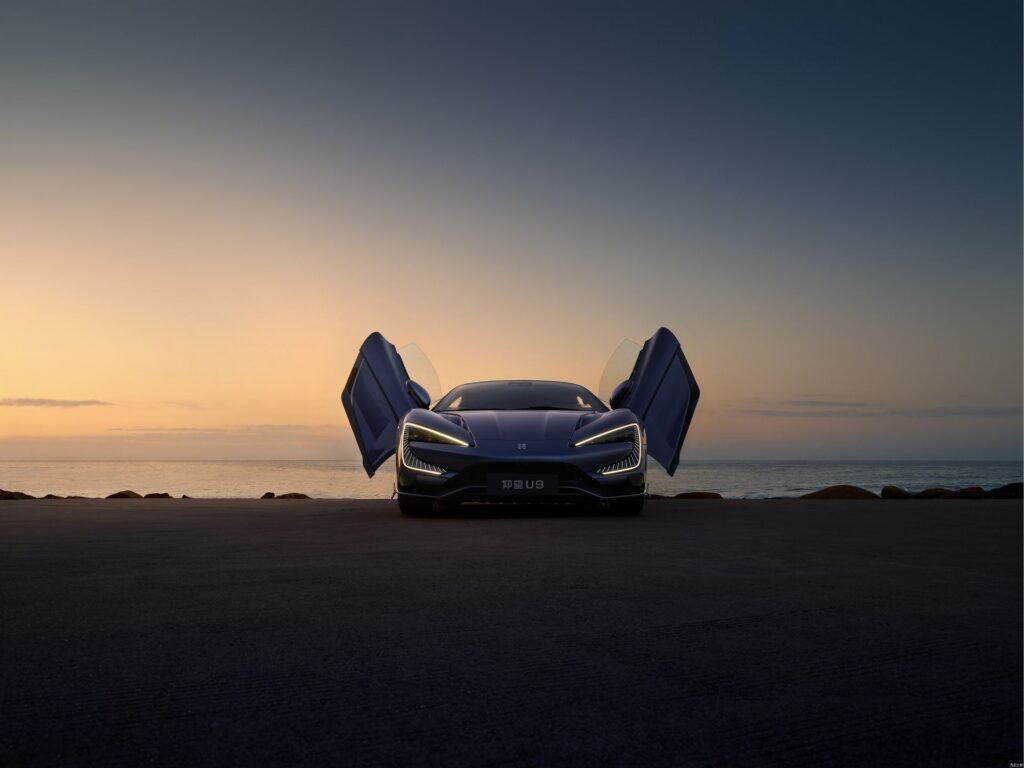
In the first week of August, many Chinese automakers released their sales figures for July. Looking back on July, China’s new-energy vehicle sales continued to rise, and the momentum of development remains rapid. At the same time, a group of luxury brands, led by BMW, announced that they were withdrawing from the “China Auto Price War” to protect their brand value, and began to adjust their prices back. On the contrary, the independent brand is still steady, in the volume of prices at the same time, but also do not forget to research technology, so consumers will pay for it? Let’s take a look at the sales performance of China’s major automakers in July! Major Chinese Car Brands: The overall results of Chinese auto brands are still very good, the head of several auto groups, BYD, Chery, Changan, and Geely model sales of more than 150,000 units, although individual car companies only released some of the data, but the comprehensive January-July sales, most of them are still steady to good trend. 1. BYD BYD officially released that July sales amounted to 342,383 units, of which 340,799 passenger cars were sold, up 30.5% year-on-year. The BYD Dynasty + Ocean series sold a total of 328,178 units, up 31.3% year-on-year. As for other brands, Denza Auto sold 10,340 units in July, Yangwang Auto sold 439 units in July, and the Formula Leopard brand sold 1,842 units in July. Meanwhile, BYD exported a total of 30,014 units overseas in July, a year-on-year increase of 65.2%. 2. chery Chery Holdings Group released a sales snapshot, the overall automobile sales in July were 195,759 units, an increase of 30.1% year-on-year. Among them, 90,281 units were exported overseas, up 16.8% year-on-year; 45,370 units of new energy vehicles were sold, up 254.5% year-on-year. From January to July, Chery Group sold a total of 1,296,380 vehicles, up 45.4% year-on-year. In terms of a single brand, Chery auto sold 123,123 vehicles in July, up 20.4% year-on-year; January-July sales of 829,890 vehicles, up 38.3% year-on-year; Exeed auto sold 14,443 vehicles in July, up 26% year-on-year; January-July sales of 68,890 vehicles, up 28.3% year-on-year. Jetour Auto sold 41,106 vehicles in July, up 91.1% year-on-year; January-July sales of 264,661 vehicles, up 97.7% year-on-year; iCAR auto’s first product has been on the market for five months, with sales of 6,065 vehicles in July; cumulative sales so far this year are 31,651 vehicles. 3. Geely Geely Automobile officially said that July 2024 sales were 150,782 units, up 13% year-on-year; January-July cumulative sales of 110,6512 units, up over 36% year-on-year. Among them, July new energy sales of 59,051 units, up 58%; January-July new energy cumulative sales of 379,236 units, an increase of 105%. July overseas export sales of 32,382 units, up 65%; January-July overseas export cumulative sales of 229,810 units, an increase of 67%. From a single brand point of view, Geely’s auto sales of 113,855 units in July, January-July cumulative sales of 855,715 units, an increase of more than 30% year-on-year. Among them, the Geely Galaxy series sold 16,704 units in July, an increase of more than 66% year-on-year, and the cumulative sales from January to July totaled 98,125 units, an increase of more than 397% year-on-year. China Star – Premium Series sold 34,244 units in July, up 24% year-on-year. The LYNK&CO auto sold 21,272 units in July, with cumulative sales of 147,272 units from January to July, an increase of more than 48% year-on-year. Among them, the new energy family of LYNK&CO sold 15,094 units in July. Overall July new energy models accounted for 71% of Link’s total sales, a record high. It is reported that LYNK&CO’s first pure electric model Z10 will be officially listed in September. Zeekr brand sales in July were 15,655 units, an increase of 30% year-on-year, and January-July cumulative deliveries of 103,525 units, an increase of 89% year-on-year. Currently, Zeekr has made its deliveries exceed 300,000 units in just 33 months. 4. Changan Chang’an Automobile’s overall sales in January-July 2024 amounted to 1,504,682 units, an increase of 5.7% year-on-year. Among them, Changan Automobile’s independent brand New Energy sold 344,483 units in January-July, up 59.8% year-on-year; Changan Automobile’s independent brand overseas sold 228,607 units in January-July, up 67.6% year-on-year; and Changan’s series of Chinese-branded passenger cars sold 919,075 units in January-July, up 1.8% year-on-year. In terms of individual brands, Changan Qiyuan delivered 85,413 units in January-July, Deepal Auto delivered 100,579 units in January-July, and Avatr delivered 32,655 units in January-July. Changan Auto sold 715,895 units in January-July, Changan Kaicheng sold 141,086 units in January-July, Changan Ford sold 128,432 units in January-July, and Changan Mazda sold 41,169 units in January-July. Among them, Avatr delivered 3,625 units in July, up 103% year-on-year. At the same time, Avatr also took the initiative to carry out channel changes, with direct + agent dual-line parallel mode, to accelerate the construction of channel capacity, and to provide users with more convenient and better quality of service. It is worth mentioning that this year, Avita will bring two new models, namely Avatr 07 (expected to be launched in September) and Avatr 12 Extended Range Version (expected to be launched within the fourth quarter). A total of 16,721 units of Deepal cars were delivered in July, and in July, the delivery of the Deepal G318 was officially opened, while the Deepal S07 was also launched, which was available in 10 models at a good price. 5. GWM Great Wall Motor sold 91,285 units in July, down 16.32 percent year-on-year. 650,954 units were sold in the January-July total, up 3.6 percent year-on-year. In terms of brands, almost all of them, except for the Tank auto, saw a year-on-year decline. Haval Auto sold 52,944 units this month, down 15.92% year-on-year, with cumulative sales of 352,682 units from January to July, down 0.82% year-on-year. 2,765 units of WEY auto were sold this month, down 58.43% year-on-year, with cumulative sales of 22,632 units from January to July this year. Great Wall pickup truck sales of 12,028 units, down 24.07% year-on-year,

China’s Auto Sales List in July: China’s Auto Price War Turns White-Hot? (Part I) Read More »

Overview of Electric Vehicles Market Trends to 2023

In a recent online seminar, Canalys automotive industry analysts provided insights into the global electric vehicle (EV) market outlook to 2023. Here are a few key trends that will shape the market in the coming year: The market is recovering from adjustments to EV subsidy policies In January 2023, governments around the world adjusted their EV subsidy policies almost simultaneously. This dealt a huge blow to EV sales in 2022, as buyers either purchased early in order to use their 2022 subsidies or delayed their purchases in order to use their 2023 subsidies. These adjustments are already negatively impacting 2023 orders and will continue to do so throughout the year. Changes in major EV markets include the complete elimination of subsidies for EVs in China, Norway, Sweden, and the United Kingdom. France, Germany and the Netherlands continue to cut subsidies. A few markets will increase subsidies in 2023, but depending on the brand of the EV, the U.S. being one of them. Under the new policy, the government will subsidize different EV models depending on price, where they are assembled, and where the battery minerals and components are sourced. But such a policy could have a “one step forward, two steps back” result in the U.S.: fewer vehicles would qualify for federal tax credits in 2023 than in 2022. Tesla’s Electric Car Price War Tesla lowered its vehicle prices in January 2023, and competitors are under pressure to cut prices as well. When the most profitable headliner in an industry cuts prices, it can be devastating to many of its peers, especially emerging brands that are not yet profitable. Tesla’s overall price cut is about 20 percent, depending on the model and market. Not only does this move expand the target market, but in addition, more Tesla models will be eligible for subsidies in 2023 compared to 2022, especially in the United States. Price cuts are also beneficial in maintaining sales in markets where subsidies have been eliminated. Since Tesla doesn’t have a network of dealers, marketing campaigns, or cumbersome processes to drag down, it can make quick decisions based on local market conditions. Unlike many of its competitors, Tesla has economies of scale and the ability to deliver quickly by increasing capacity and efficiency. While price cuts can affect the brand’s margins and cause dissatisfaction among customers who previously purchased vehicles at higher prices, for Tesla, more vehicles on the road will improve the company’s ability to cash in on software and services. Geographic expansion and market repositioning Some of China’s emerging EV brands are going abroad, and these brands are targeting markets where demand is strong and/or in short supply, or where product choice is limited, in the hope of finding new opportunities. Europe has been a key target for them, with more than a dozen Chinese automakers entering the European EV market in 2022. These brands will initially choose to work with distributors, but some have also opted to set up headquarters, service centers, and showrooms in Europe. But in 2023, car companies will have to remain flexible and move to other markets if necessary, as demand for electric vehicles is heavily influenced by price and government incentives. Without incentives, the luxury showrooms that these brands have opened in places like Oslo, Norway, will soon be deserted. Beyond Europe, there are many opportunities for emerging brands to grow in 2023, such as Australia, India, Japan, Latin America, and Southeast Asia, many of which will still not have a mainstream EV brand in 2022. EV growth to slow in mature markets With rising interest rates and inflation and uncertainty about the shape of the overall economy, the best the entire light-duty vehicle market can expect in 2023 will be a year of low-single-digit moderate growth. 2022 will see the price of electric vehicles rise as material and manufacturing costs generally rise. 2022 will see the average price of an electric vehicle in the United States at around $65,000 (€61,000), a price range that does not There are not enough potential customers in this price range. That’s because there aren’t many other models available to American consumers. Chinese car companies have done their homework on electric cars, working to meet not only the needs of all customers, but more importantly, the budgets of all customers. For example, the Wuling Hongguang Mini EV, which is selling like hotcakes, starts as low as 33,000 yuan ($4,800). Since its launch in mid-2020, the model has sold a staggering one million units, and although there are many similar models from competitors, none of them can match it. In contrast, European customers have a wider selection of models, including popular compact cars. But when it comes to price points, European consumers are only willing to accept a premium of around 25 percent for electric vehicles, including the electric version of the Peugeot 208, Europe’s most popular car. In summary, while the market is not yet saturated, EV sales growth will slow in 2023 due to the lack of electric versions of certain vehicle lines, the price gap between EVs and fuel cars, the weak economy, and the elimination of EV subsidies in many markets. In addition, maintaining a growth rate of more than 50 percent year-over-year is ultimately a very difficult task.

Overview of Electric Vehicles Market Trends to 2023 Read More »

Global EV Outlook 2023

Summary of the Global EV Outlook 2023 Report by IEA

With the gradual increase in the popularity and acceptance of electric vehicles around the world, it not only drives the rapid emergence of a new global energy economy, but also brings about a historic change in the world’s automobile manufacturing industry. The “Global EV Outlook 2023” report released by the International Energy Agency (IEA) analyzes and forecasts the global development of electric vehicles, battery demand, and related policies. The following is a brief summary of this report. Global electric vehicle sales break records in 2022 Electric vehicle sales exceeded 10 million units in 2022, showing exponential growth. 2.3 million new energy electric vehicles were sold globally in the first quarter of 2023, an increase of about 25% over the same period last year. Global sales are expected to grow 35% year-on-year to 14 million units in 2023, increasing its share of the overall automotive market to 18%. The vast majority of electric vehicle sales are concentrated in three major markets – China, Europe and the United States. Among them, China is the frontrunner, with 60% of global EV sales occurring in China last year, and more than half of the world’s sold EVs in China. In addition, electric vehicle sales in Europe and the United States grew by 15% and 55% respectively last year, while electric vehicle sales in India and Indonesia more than tripled and sales in Thailand doubled. Policy programs in major economies will further increase the market share of electric vehicles. landmark electric vehicle policies are promoting electric vehicles to help climate goals Policies in major economies around the world will increase the market share of electric vehicles to 50% by 2030. The electric vehicle boom will drive global oil demand for road transport to peak around 2025 and emit about 700 million tons of carbon dioxide. Battery manufacturing is expected to meet the net-zero emissions needs of electric vehicles by 2050. More affordable models enter the market as competition intensifies Global spending on electric vehicles exceeds $425 billion in 2022, up 50% from 2021; venture capital investments by startups for R&D of electric vehicle and battery technologies total nearly $2.1 billion, up 30% from 2021; and investments related to batteries and key minerals are also on the rise. In 2022, the number of EV types available reaches 500, more than twice as many as in 2018. A growing number of new entrants are offering more affordable models, with a growing range of EVs for consumers to choose from.However, the number of EV models available globally is still much lower than the variety of combustion engine vehicles available in the market. With the rapid development of electric vehicles, the electrification of more vehicle models has become a focal point The electrification of road transport is not only limited to cars, two-wheelers/three-wheelers are also the most important electrification market. Electrification of commercial vehicles is also increasing, with global sales of electric light commercial vehicles growing by 90% in 2022 to around 310,000 units. China is a global leader in market share for electric two/three-wheelers, electric buses, and electric trucks, in addition to electric cars. More than one-third of China’s two/three-wheelers are electric, and the global share of electric buses and electric trucks exceeds 95%. Electric vehicles and batteries feature prominently in decision-making EV market trends are having a positive knock-on effect on battery production and supply chains. There are enough battery projects announced globally to meet EV demand through 2030. However, the battery and materials market remains highly concentrated, with China’s battery and materials exports accounting for more than 35% of the global share in 2022.

Summary of the Global EV Outlook 2023 Report by IEA Read More »

Electric Automotive

Impact of Battery, Motor, and BMS on Electric Vehicle Range

With the development of the electric vehicle industry, “range” has always been the biggest headache for many electric vehicle owners and prospective owners. Anyone who owns an electric car or has experienced an electric car must be particularly concerned about the remaining battery life (the number of miles that can be traveled) when driving. When the power is less than half or not much left, some owners will not be able to step on the gas, not to turn on the air conditioning, this behavior is mileage anxiety. Today, all electric car companies have not completely solved the problem of mileage anxiety, even the best Tesla, but also can not let people feel at ease to run long distances at will. It is estimated that many people who have just bought an electric car or are about to buy one are also confused about this issue. So today we will talk to you about which factors are restricting the range of electric cars. All out of working conditions of the range is a rogue The concept of comprehensive working conditions for the electric car range of the factors that affect it? What exactly is the impact of the current electric vehicle range breakthrough bottleneck? Before the specific discussion, first of all, we must understand that the electric vehicle range is not an absolute value. If you care about EVs, you will notice that most of the manufacturers will indicate “range under NEDC xxxkm” and “cruising speed xxx kilometers” in their publicity. Why would a car have two different ranges? In fact, this is because of the different test conditions. NEDC is the abbreviation of New European Driving Cycle, which includes different starting and stopping, acceleration and deceleration conditions. The figure tested under NEDC will definitely be smaller than that under 60km iso-cruise, but it will be closer to the real road conditions of city driving. EPA stands for Environmental Protection Agency, and EVs that come to market in North America will adopt EPA standards. EPA’s working conditions simulate city congestion, highway, and cold weather, and are the most reflective of real-world mileage. So in general, the range figures under EPA are smaller than NEDC, i.e. EPA < NEDC < Equal Cruise. This is like saying that a marathon champion’s “range” is 42 kilometers, but if you let him run while hurdling, it is estimated that it is difficult for him to finish 5 kilometers. China’s EV range certification mainly refers to Europe’s NEDC standards and test cycles, and most Chinese car companies will mark the range under NEDC. Therefore, all the range from the working conditions are rogue. The choice of range is actually the result of a game of balance of various factors Under the premise of the same working conditions, the factors that determine the range of the car itself are also intricate and complex, and these complex relationships can be summarized in one word: Balance. How much range is a head? From the 145km of GM EV1 in the 90s, to the 271km of BMW i3, to the 320km of Rongwei ERX5 and the 500+ of Tesla, in the end, how much range is a head? I think we need to go back to the term “mileage anxiety” to discuss. One of the reasons why EV owners have mileage anxiety is that they need to spend time and mileage to find a charging station in case of power emergency, and they need to spend more time and cost to charge the car after finding a charging station. Assuming that one day, the mileage of the electric car will be stuck at NEDC 500km, but at that time, there are more charging stations than gas stations, as long as the parking will have a small charging station can be charged, at this time, the use of electric cars will be closer to the cell phone. Currently, most cell phones are charged once a day, and the reason why users are less anxious is that there are a lot of charging resources: you can charge when you drive, you can charge when you go to the office, and you can charge when you’re outdoors, so you have charging pouches for emergencies. There is also a situation, the driving range of the electric car is still stuck in the NEDC 500km, but the charging speed and now refueling as fast, this situation is very similar to the feeling of the electric car and gasoline cars, power or no power to drive hard, anyway, charging fast, after charging is a good man, but the probability of such a situation is very small, because it will be on the charging and battery technology requirements are very high. Maybe there is a possibility that the charging speed has been due to R & D stagnation; infrastructure support and other reasons, no speed, but the range has reached NEDC 1000km, perhaps this is also a solution to the mileage anxiety program, if you take this program, even if you just run 50km a day, it is also necessary to carry a large battery to do a lot of extra useless work, is an extreme waste. The results of user research show that: poor charging experience, poor supporting facilities and charging time, is the pressure on the consumer three mountains. The biggest problem is the lack of home charging stations and poor public charging stations. So what are consumers’ requirements for a “qualified” electric vehicle? 85% of consumers want an electric car with a range of 300km or even 400km or more. So, under certain technical constraints, consumers have to choose between range and charging efficiency, what will they choose? The final choice is polarized. Long range, long charging time and short range, short charging time stand out. A portion of consumers are willing to accept longer charging time to get longer range and reduce the frequency of charging; while another portion of consumers believe that fast charging and relatively close to the gas

Impact of Battery, Motor, and BMS on Electric Vehicle Range Read More »

kia ev6

Autotrader’s list of the best electric cars for 2023, without Tesla or BYD

Recently, Autotrader, the largest automotive specialty website in the United States, released a new list to help customers who are willing to buy a purely electric vehicle. The list contains ten best electric cars for 2023, and all of these vehicles have high ratings. Surprisingly though, Tesla, which is the global leader in new energy vehicles today, does not have a single model on the list. What’s even more surprising is that Chinese brands, which are the fastest-growing electric vehicles, also didn’t have a single model on the list, including new-energy vehicle leaders like BYD. The site’s editorial team chose ten models – the BMW i4, Ford F-150 Lightning, Janisys Electric G80, Janisys GV60, Hyundai IONIQ , Kia EV6, Lucid Air, Nissan Ariya, Porsche Taycan and Rivian R1T. If you analyze these finalists closely, you’ll notice that most of them are relatively new vehicles. The oldest on the list is the Porsche Taycan, which was launched in 2019, but it never stops improving and introducing new derivatives. Most importantly, it has an 800V system that can charge faster than many vehicles that work on 400V. The reason why there isn’t a Tesla on the list is because the American manufacturer hasn’t launched a new car since it brought the Model Y in 2020. It was supposed to start selling the second-generation Roadster in 2021 and the Cybertruck in 2022, but ultimately chose to skip out on both.Autotrader says it’s hard for them to evaluate any Tesla because the BEV maker doesn’t have an effective PR department outside of China. That means it doesn’t have a press team either. Anyone willing to evaluate its cars would have to ask a Tesla owner to drive or rent the required vehicle. So why didn’t any of the Chinese brands make the cut either? It has to do with Autotrader’s selection criteria and scope. According to its website, the list is evaluated based on the following aspects: price, performance, comfort, safety, reliability, technology and user experience. In addition, the list is only for electric vehicles available for purchase or coming soon to the U.S. market. BYD Seagull This means that some EV brands and models that have performed well in the Chinese market don’t have a chance to make the list. BYD, for example, as one of the world’s largest manufacturers of new energy vehicles, has the ability to develop and produce core components such as batteries, motors and electronic controls in China. Its models, such as the Han EV and Qin PLUS EV, not only have high value, high performance and high range, but also have advanced technologies such as smart internet connection and autonomous driving. However, since BYD does not sell passenger cars in the U.S. market yet, it is not on the list. In short, the foreign media’s list of the best electric cars for 2023 does not fully reflect the strength and advantages of each brand’s electric car. The best electric car still needs to be judged in conjunction with one’s budget, preferences, etc.

Autotrader’s list of the best electric cars for 2023, without Tesla or BYD Read More »

Automotive

Who is the strongest electric car manufacturer? Taking a look at the top three brands with the highest sales in the first half of 2023

With increasing environmental awareness and technological advancements, the electric vehicle market is emerging as a new hotspot in the global automotive market.In the first half of 2023, electric vehicle sales hit a new record high, with Tesla, BYD, and BMW becoming the top three brands in terms of sales. No.1 Tesla Tesla, the world’s most prominent electric vehicle manufacturer, continues to lead the electric vehicle market. Tesla topped the list of electric vehicles sold in the first half of 2023, attracting a large number of consumers with its high performance, long range and advanced self-driving technology. Tesla has launched a number of hot-selling models, including Model 3, Model S, Model X and Model Y, and continues to meet the needs of different consumer groups, becoming a leading company in the electric vehicle market. No.2 BYD BYD is the largest electric vehicle manufacturer in China and one of the leading electric vehicle manufacturers in the world. in the first half of 2023, BYD ranked second in electric vehicle sales. BYD has accumulated extensive experience and technology in the field of electric vehicles, which are particularly popular in the Chinese market. It has launched a number of electric models, such as BYD Tang and Qin, which have high performance and good range and are well received by consumers. No.3 BMW BMW, a traditional luxury automaker, has also made significant progress in the electric vehicle sector. in the first half of 2023, BMW ranked third in electric vehicle sales. BMW launched a number of electric models, such as the i3 and iX3, which maintain the luxury and handling performance of the BMW brand while actively catering to the trend of environmental protection and energy saving, attracting the attention and purchase of many consumers. The sales performance of these three brands fully reflects the vitality and potential of the electric vehicle market. With the continuous advancement of technology and market expansion, electric vehicles will continue to occupy an important position in the future and drive the transformation and upgrading of the automobile industry. However, while Tesla, BYD and BMW are leading in sales, other manufacturers are also actively entering the electric vehicle market, and competition is getting fiercer. It remains to be seen which brand will be able to stand out and gain a larger market share in the future competition. To summarize, in the first half of 2023, Tesla, BYD and BMW ranked in the top three of the electric car sales list respectively. The success of these three brands not only highlights the development potential of the electric vehicle market, but also sets a successful example for other manufacturers. In the future, the electric vehicle market will continue to maintain its growth momentum, pushing the automotive industry in the direction of being more environmentally friendly and intelligent.

Who is the strongest electric car manufacturer? Taking a look at the top three brands with the highest sales in the first half of 2023 Read More »

kia ev day

Kia Unveils EV5 and Two Concept Models on ‘Kia EV Day’ to Accelerate Electric Vehicle Development

On October 12, 2023, Kia held its annual “Kia EV Day” in South Korea, where it unveiled three new small and medium-sized electric models and reaffirmed its ambitious global strategy to lead and accelerate the “Electric Vehicle Revolution”. EVs For All During the event, Kia presented its vision of “EVs for all” and its strategy to significantly and rapidly expand its EV model lineup. With the launch of the EV6 and EV9, Kia has successfully established itself as an EV brand, and has further expanded its model lineup with the introduction of three all-new small and medium-sized EVs, giving more people more opportunities to choose and use electric vehicles. At the event, Kia unveiled the EV5, a compact electric SUV for millennial families, and introduced two concept models. The Kia EV3 Concept aims to incorporate the benefits of the Kia EV9 into a compact SUV, while the Kia EV4 Concept reinterprets the electric sedan with a stunning design. In addition to unveiling the model lineup, the event also showcased Kia’s electrification strategy, which aims to provide customers with more convenient and reliable products and services, and is designed to address common customer concerns, including charging infrastructure. “Kia is focused on providing solutions to issues that continue to cause customer hesitation when purchasing an electric vehicle. We will offer a full range of electric vehicles at all price points and enhance the utility of charging infrastructure to meet customer expectations.” Kia Global President and CEO Tiger Song said. “As a sustainable mobility solutions provider, Kia’s transition to electric vehicles is a necessity, not a choice. By developing advanced EV technologies, adopting bold designs and offering intuitive services across our entire EV range, our ultimate goal is to deliver Kia’s unique value to as many people as possible. Thus begins the process of accelerating electrification.” Kia also unveiled plans to enhance a variety of customer experiences, including streamlining different features into one user-friendly smartphone app, launching new services at physical locations, and providing users with in-vehicle artificial intelligence services. “Kia aims to provide solutions for sustainable mobility and to meet the needs of its users by eliminating their perceived difficulties. We want to make the process as easy and enjoyable as possible for the user throughout the entire process, i.e. from digital to offline to in-vehicle interactions. This includes the different stages before, during and after the purchase.” Said Masanobu Ryu, Head of Brand and User Experience Headquarters. “At the core of Kia’s philosophy is our commitment to provide more advanced sustainable mobility solutions to improve people’s lives. As such, we will continue to look for better ways to grow by adopting new digital platforms and technologies to meet the needs of our users.” Driven by the products and strategies announced today, Kia aims to achieve annual electric vehicle sales of one million units by 2026, increasing to 1.6 million units by 2030. Kia’s Electrification Strategy: Expanding the EV Lineup, Adding Charging Infrastructure, and Providing More Convenience for Customers Using Electric Vehicles Kia has announced its plans to develop electric vehicles and expand its model lineup, with pricing ranging from $30,000 to $80,000, including the EV6 and EV9 on sale, as well as future products tailored to the popular B- and C-segment. Kia plans to accelerate EV penetration with the introduction of smaller EVs such as the EV5, EV4 and EV3, with pricing ranging from $35,000 to $50,000. In emerging markets where EV penetration is low, Kia will initially focus on the EV6 and EV9, followed by the release of strategic models such as the EV5, EV4 and EV3. The move is aimed at enriching the product range to meet different customer preferences. Kia is currently working to establish a reliable EV production and battery supply system and plans to increase its global EV production bases to eight by 2025. These production bases will be centered in South Korea and cover research, development, production and supply. In Europe, Kia will focus on the production of small and medium-sized electric vehicles, while in China, it will focus on the production of medium and large-sized electric vehicles. In addition, electric vehicles tailored for emerging markets will be produced in India. Kia also plans to launch a variety of EV models in North America in response to the Inflation Reduction Act (IRA). At the same time, Kia is actively establishing battery joint ventures to ensure a stable global battery supply system that is synchronized with the global EV production network. Kia’s Electric Vehicle Lineup: A Rapidly Expanding Range of Models to Meet Diverse Customer Needs Each electric vehicle plays a strategically important role in accelerating Kia’s electrification transition. The popularization of electric vehicles is being promoted by making them more attractive to a growing customer base. While each model is tailored to meet specific and diverse customer needs, they all share common elements such as the Kia brand’s advanced electric platform technology, the innovative Opposites United design philosophy and the brand’s sustainable Colors, Materials and Finishes (“CMF”) strategy. CMF) strategy. The latter involves practicing sustainability on a larger scale through practical actions such as the use of ten must-have sustainable materials in the construction of each model, including bioplastics, bio-paints and recycled PET or fishing net carpeting. Kia EV5 SUV: Designed to Meet the Needs and Expectations of Millennial Families The EV5 is the third dedicated all-electric vehicle in Kia’s EV lineup, based on Kia’s EV-specific platform, E-GMP, which ushers in a new era of electric mobility and unique SUV design. Adopting the brand’s unique “Opposites United” design philosophy, the Kia EV5 combines superior versatility and comfort with advanced technology, dynamics and safety to create a vehicle that is beautifully harmonized and balanced. The EV5’s interior completely reinvents the vehicle’s interior space. Taking inspiration from the recently launched EV9, a large SUV, the model features a spacious interior that is closer to a family lounge than a traditional car cabin. Electric Powertrain and Driving Experience The EV5 will be developed on Kia’s EV platform,

Kia Unveils EV5 and Two Concept Models on ‘Kia EV Day’ to Accelerate Electric Vehicle Development Read More »

Automotive

Best Selling Electric Cars in August 2023

Recently, CleanTechnica, an international clean energy research organization, released a list of the world’s top 20 best-selling electric vehicles in August 2023, in which the Tesla Model Y took the lead with 115,885 units, the second-place BYD Song family sold 57,603 units, and the third-place Tesla Model 3 sold 48,815 units. It is worth mentioning that among the list, as many as 16 Chinese brand models were on the list, with a proportion as high as 80%. The August list shows that Tesla Model Y’s sales lead is obvious, enough to lead the second place BYD Song family by 58,282 units, plus the sales of the third place Tesla Model 3, Tesla’s global sales reached 164,700 units in August, and you can feel Musk’s happiness through the screen. However, the sales of all BYD models in the list amounted to a whopping 247,171 units when aggregated, making it the top-selling brand in the world. Of course, the biggest highlight of the list in August, is the Chinese brand on the list, 20 seats inside the full occupied 16 seats, the brand in addition to BYD, there are BAIC Aion, Wuling, Li, Changan and Geely. Among the Chinese brand models, BYD has 8 models on the list, respectively Song family, Qin PLUS, Seagull, Yuan PLUS, Dolphin, Han family, destroyer 05, Tang family; Aion has 2 models on the list, respectively Aion Y and Aion S; Wuling has 2 models on the list, respectively Hongguang MINIEV and Bingo; Li has two models on the list, L7 and L8; Changan is listed on the list of Lumin, and Geely’s Galaxy L7 is on the list. From the overall situation of the list, we can see that each brand’s strategy is also different: Tesla’s leading edge is still very obvious, although there are not many models, but their respective sales are very high, and the cost control is within a reasonable range, and the profit continues to go up; and BYD is to take the route of “having many children to fight”, with a large number of model styles, and although the sales volume of a single model is not too high, it is still winning the competition. Although the sales of individual models are not too high, but in full bloom, the total sales together can already grab the top of the global sales list.

Best Selling Electric Cars in August 2023 Read More »

best electric SUV less than $20000

Which is the best electric SUV for less than $20,000?

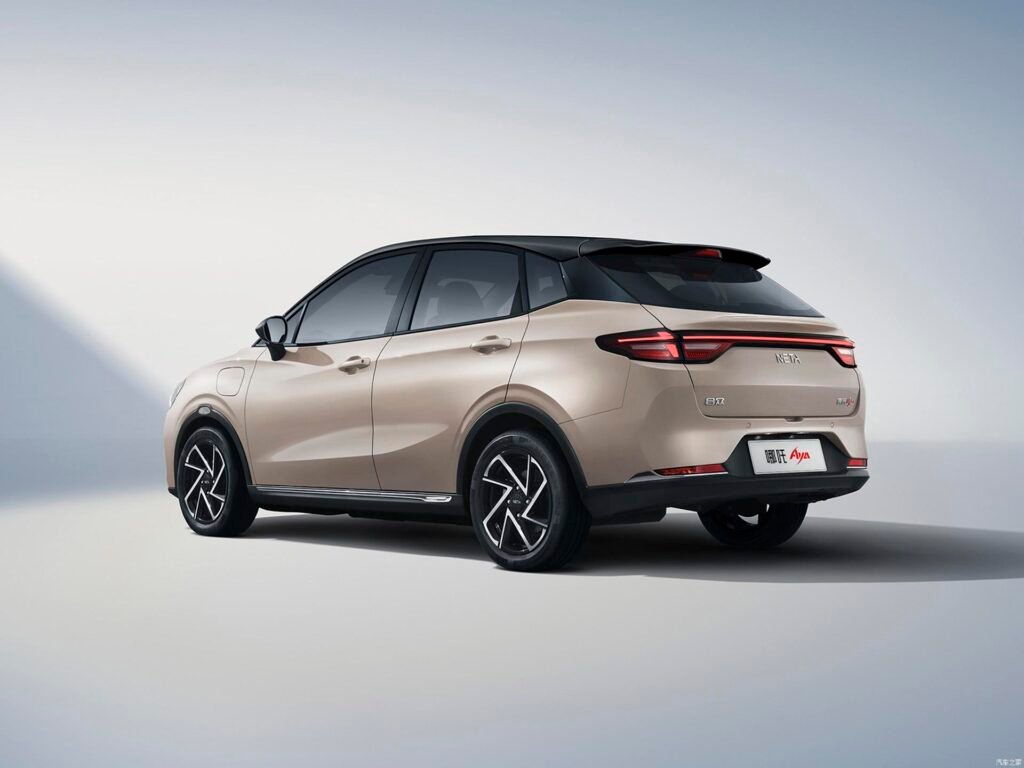
Many people are not too optimistic about new energy vehicles, but there are a lot of people who want to join the family of new energy vehicles, too expensive cars to buy in case of problems will not be worth it, too cheap practicality is not strong, so the new energy vehicles under $20,000 has become a hot zone, especially the practicality of the more powerful SUV models. This post will introduce three of the hotter pure-electric SUVs on the market to see who of them is more worth getting. AION Y Price: From $16400 Class: Compact SUV GAC AION Y, its overall design looks a bit rounded, especially its front face, which adopts a near-vertical closed styling design, applying minimalist and simple design to the extreme. The most recognizable thing is its dart-shaped linear LED headlights on both sides, which have a very strong sense of fashionable design. AION Y’s interior design is also based on simplicity, with a three-spoke flat-bottomed steering wheel, more sporty, and the horizontal design of the center console, color-matched LCD gauges and 14.6-inch center control screen, a strong sense of technology, which has a 360 panoramic view and 540 chassis panoramic view, which is more convenient, but the front radar needs to be optional, and the passenger’s electric seat also needs to be optional, otherwise only manual adjustment, which is Somewhat less in line with its high end model configuration. AION Y body dimensions: length 4535mm/width 1870mm/height 1650mm, wheelbase 2750mm, although the length of the AION Y body does not dominate, but its wheelbase is very good, coupled with the flat rear floor, the ride space is very rich, more than enough for heights below 1 meter 85. AION Y is equipped with a ternary lithium battery, maximum output power of 150kW, maximum torque of 225Nm, CLTC pure electric range of 610 kilometers, enough power, long range, the performance is quite good. BYD Yuan PLUS Price: From $18300 Class: Compact SUV BYD Yuan PLUS is also inherited family design, closed front design in the middle of a silver chrome, on the “Yuan” logo, both sides of the headlights narrow sharp, although the body is small, but also bring a good momentum. The interior of the Yuan PLUS adopts a double color design, more design and youthfulness than before, and the center control is paired with a 15.6-inch rotatable center control screen. Its air conditioning vents are designed with a more technological sense, and with its many interior details, it is more popular with young people. The Yuan PLUS is equipped with 360 panoramic view and front and rear radar, and the assisted driving can reach the L2 level, but many people complained that the sound insulation inside the Yuan PLUS is not good, so I hope that the officials will follow up with some improvements. Yuan PLUS body dimensions are: 4455mm/1875mm/1615mm, wheelbase is 2720mm, as a compact SUV, this car inside space performance is average, just over 2 meters 7 wheelbase although there is a pure flat floor, but the space performance is not so ideal, 1 meter 75 height below the person sitting is not bad, and then taller will be a little constricted. Yuan PLUS is equipped with its own lithium iron phosphate batteries, also known as blade batteries, with a maximum power of 150kW and a maximum torque of 310Nm, and a CLTC combined range of 510 kilometers, which is more powerful, but the range performance is average. Neta U Price: From $15500 Class: Compact SUV The Neta U has its own unique design, especially in the front, where the two “Go” shaped headlights extend towards the center of the car and connect with each other, with a light-emitting strip in the middle, and a dot-shaped light strip, which is highly recognizable when illuminated. The interior design of the Neta U is also simple, with most of the physical buttons integrated into the center screen. The interior features three large screens, the largest of which is an 8-inch LCD instrument and center screen, and a smaller screen below, somewhat similar to Audi’s three-screen design. Neta U is equipped with front and rear radar and reversing camera, which is enough for normal use, but there is no 360 panoramic view, which is not very convenient for some newbies. Especially in terms of safety features, only the main and passenger airbags, other parts and positions are not equipped with airbags, safety is low. Neta U’s dimensions are 4549mm/1860mm/1628mm, with a wheelbase of 2770. Despite its average dimensions, Neta U’s wheelbase of nearly 2.8 meters makes the interior space close to that of a medium-sized SUV, and it’s more than enough room for a person of 1.85 meters to sit in the back row. The Neta U is powered by a lithium iron phosphate battery with a maximum power of 120kW and a maximum torque of 210Nm. The CLTC range performance is 501 kilometers, which is an average power performance and a moderate range. Conclusion In a comprehensive view, these three pure electric compact SUVs also have their own advantages and disadvantages, of which the AION Y has the highest range, the configuration is slightly lower, and it is the only one of the three to use a non-independent suspension for the rear wheels. The second Yuan PLUS has the most power, the highest configuration, medium range, and slightly less space. The third, the Neta U, has the best space performance, but its range and power performance are relatively weak. So which one of these three SUVs is your favorite, or if you have any other better SUVs, feel free to share them with us below.

Which is the best electric SUV for less than $20,000? Read More »

electric car

EV, BEV, HEV, PHEV, FCV, electric vehicle, what do they all mean?

An electric vehicle is simply a car that uses electricity as its energy supply and an electric motor as its power engine. But are you guys dazzled and confused when you see EVs, PHEVs, pure electrics, hybrids, range-extended electric vehicles and other various types of electric vehicles in various media? This article will ask you to explain. EV Electric vehicle (EV) covers all kinds of cars with electric features. Basically, any car equipped with an electric motor can be collectively called an EV. BEV Battery Electric vehicle. Characteristics of Vehicles Generally refers to pure electric vehicles. This means that only the battery provides the energy supply, and only the electric motor provides the power to drive the car forward. This type of vehicle can realize a completely zero-emission driving process. Pure electric vehicles are generally equipped with larger-capacity batteries and provide both AC slow charging and DC fast charging ports. Because this type of vehicle can only rely on the battery to provide energy, based on the current battery performance and the current state of the charging infrastructure, pure electric models will bring greater mileage anxiety to the owner, to put it in human terms, is always worrying about driving halfway out of battery, and be dumped on the road. Representative Models Tesla series, Azera, Xiaopeng, BMW i3, BYD Qin EV, Tang EV, BAIC EV series, Chery Arizer 5e, JAC iEV series, etc. HEV Hybrid Electric vehicle. Generally refers to energy provided by fuel and battery. The fuel engine and electric motor provide power. Characteristics of car models This model generally has a small battery capacity and does not provide a charging port; the battery’s energy is recharged through energy recovery during the vehicle’s operation. The electric motor of this model is also not very powerful, and assists the fuel engine in providing power in scenarios such as starting, and acceleration. Because of the electric motor’s assistance, the motor’s high torque is fully utilized to improve overall efficiency during starting and accelerating, and results in a significant reduction in the vehicle’s overall fuel consumption. Because it relies on fuel to provide energy, there is no mileage anxiety. Representative Models Toyota Prius, Toyota Leyland, Toyota Corolla, etc. PHEV Plug-in Hybrid Electric vehicle. As the name suggests, the PHEV’s on-board power battery can be recharged through an outlet or through the fuel engine. Energy is provided by the battery and fuel. Power delivery is provided by the fuel engine and the electric motor. Different automakers have large differences in the capacity of the battery, the number of electric motors, and the power configuration of the electric motor on PHEVs, which also form different vehicle styles and features. Vehicle Characteristics This type of vehicle can form a variety of drive combinations through the intervention algorithms of electric motors and fuel engines. For example, pure electric mode, pure fuel engine mode, motor plus fuel engine hybrid mode and so on. In addition, PHEV can be attacked and defended, and when charging is convenient and the power is sufficient, it can be driven in pure electric mode, which saves energy and reduces emission and also reduces the cost of the car. In the case of insufficient power charging unchanged, fuel driving, long-distance travel is also worry-free. Also, some models, such as the BYD Tang, configured with two motors before and after, and the motor power is 110Kw, plus 151Kw of fuel engine power, the peak 371Kw of power can achieve 100 km acceleration of 4.9 seconds of the monster performance, at the same time, because of the configuration of the front and rear of the two motors, it is very easy to realize the four-wheel drive. PHEV, before and after 2015, when most PHEV models configured battery capacity is not too large, basically in the 10-15Kwh or so, so generally only configured with AC slow charging a charging interface; in recent years, the battery capacity of PHEV is getting bigger and bigger, so it also started to configure fast charging interface, such as BYD Han DMi 2023 model pure electric working condition range of up to 200Km, configuration of the up to 80Kw DC fast charging interface. Representative models BYD Qin, Tang, Han, Song series, SAIC Rongwei series, Link PHEV series and so on. EREV Extended-Range Electric Vehicles (EREVs) are electric vehicles that generate electricity from fuel, charge the battery, and are driven by an electric motor. Vehicle Characteristics Motor-driven, with good characteristics of electric vehicles. It can be equipped with a smaller capacity battery for low weight and low cost. The battery can be charged through the socket or through the fuel engine while the car is traveling. There is no mileage anxiety because electricity can be generated through fuel. At present, the pure electric range of extended-range electric vehicles can basically be more than 150Km, and the comprehensive range of a full charge and full fuel is about 1,000Km, with electricity in the city and long-distance refueling, the driving experience of an electric vehicle combined with the refueling experience of a fuel car, which is a good balanced program in the current situation where the range of a pure electric vehicle and the refueling experience cannot be comparable to that of a fuel car. Representative Models Ideal ONE, BMW i3 Extended Range Edition, Lantu FREE Extended Range Edition, M5, Zero Run C11 Extended Range Edition, Nezha S Extended Range Edition, and so on. FCV Fuel cell vehicle (FCV) is a fuel cell vehicle that provides the energy needed for driving by converting the chemical energy of fuel into electrical energy, and is driven by an electric motor. Currently, the main fuel type is hydrogen.Characteristics of the vehicle Fuel cell energy is replenished by adding fuel, so the time is similar to refueling. It can be done quickly. In addition, the fuel cell energy conversion process is highly efficient, noiseless, and has no pollutant emissions.However, the biggest difficulties of fuel cell vehicles at present are the difficulty in obtaining fuel, the difficulty in

EV, BEV, HEV, PHEV, FCV, electric vehicle, what do they all mean? Read More »