- BYD’s stock surged against a broader market downturn as surging international oil prices triggered a sharp increase in domestic gasoline costs, bolstering the economic appeal of new energy vehicles.
Shares of the Chinese NEV giant climbed as much as 4.92% on the Shenzhen exchange on Monday, reaching their highest level since October 2025. The rally stood in stark contrast to the broader A-share market, where the Shanghai Composite Index fell 3.54%, the Shenzhen Component Index dropped 3.56%, and the ChiNext Index slid 3.47%.
BYD’s Hong Kong-listed shares also outperformed, jumping as much as 8.4% in early trading before paring gains to trade flat—still a stronger showing than the broader market.
Rising Fuel Costs Drive Consumer Shift
The stock movement was largely driven by an impending substantial hike in China’s gasoline prices, which increases operating costs for traditional internal combustion engine vehicles and accelerates consumer consideration of electric vehicles.
Domestic refined oil prices were set for their sixth adjustment of the year starting March 24, with estimates from Sublime China Information initially projecting an increase of around $289.40 per ton—the fifth increase this year and the largest to date.
However, China’s National Development and Reform Commission later announced temporary regulatory measures on refined oil prices, resulting in a more moderate increase than originally anticipated. Under the final adjustment, the maximum retail price of gasoline rose by $167.80 per ton, down from the $319.10 per ton increase that would have occurred under the standard pricing mechanism.
Despite the regulatory intervention, the impact on consumers remains significant. For a typical 50-liter fuel tank, filling up with standard #92 gasoline will cost approximately $5.79 more per tank.
NEV Sector Poised to Benefit
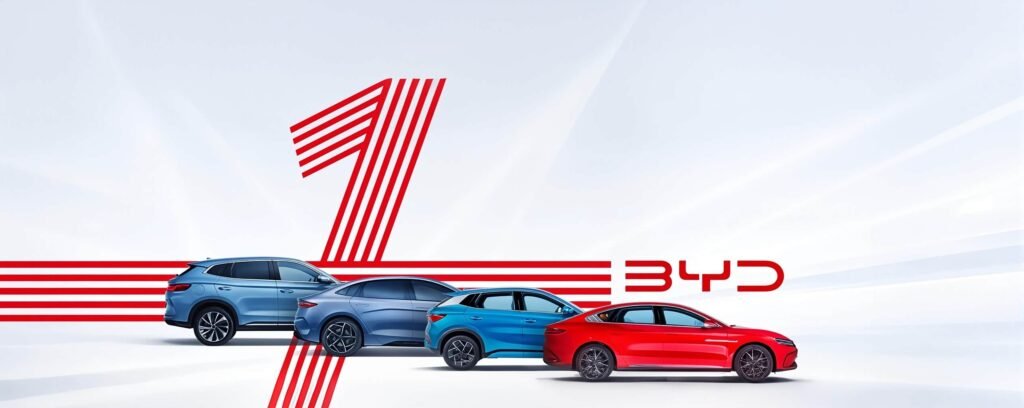
As travel costs for conventional vehicles rise, the new energy vehicle sector is positioned as a key beneficiary. BYD, which ceased production of traditional internal combustion engine vehicles in March 2022, stands at the forefront of this transition.
The company has demonstrated its market leadership with full-year 2025 battery electric vehicle (BEV) sales of 2,256,714 units, surpassing Tesla’s 1,636,129 units for the first time. BYD’s passenger vehicle lineup also includes plug-in hybrid electric vehicles (PHEVs), which recorded sales of 2,288,709 units in 2025.
Technological Advancements Strengthen Competitive Position
BYD has continued to enhance its product competitiveness through recent technological breakthroughs. Earlier this month, the company unveiled its second-generation Blade Battery and flash-charging technology, enabling a charge from 10% to 70% in just five minutes.
The company also announced plans to build 20,000 flash-charging stations nationwide by the end of 2026, addressing charging infrastructure concerns and further accelerating the replacement of gasoline-powered vehicles.
Deutsche Bank analysts noted in recent commentary that China’s mature EV ecosystem provides a natural buffer against surging oil prices, with established supply chains and consumer acceptance creating a favorable environment for NEV adoption.
The sustained rise in oil prices, coupled with BYD’s expanding technological and infrastructure advantages, continues to strengthen the investment case for the electric vehicle sector in China’s automotive market.
👉 Contact Nanjing iCheLaba Motor today for a wholesale quote!