Blog

Your blog category

Zeekr 007 GT Wagon Teased: Anticipated Starting Price at 28,650 USD

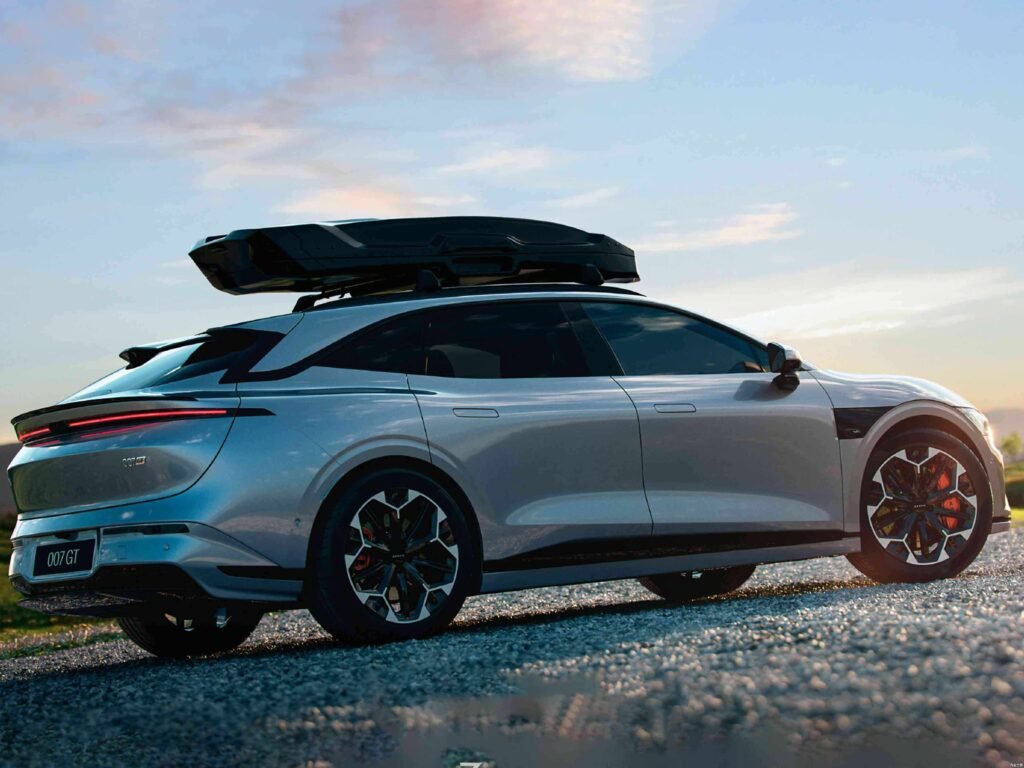
Zeekr, the premium electric vehicle (EV) brand under Geely, has unveiled teaser images of the much-anticipated 007 GT wagon. This new addition to the Zeekr lineup will be available in four distinct variants, with prices projected to start at 209,900 yuan (equivalent to 28,650 USD): The Zeekr 007 GT is a derivative of the 007 sedan. It inherits the same front-end design as its sedan counterpart, ensuring a cohesive visual identity across the range. When viewed from the side, the 007 GT showcases a more elongated body with a gently sloping roofline compared to the sedan. This design not only provides additional rear cargo space but also improves headroom for passengers in the second row. Key design elements of the wagon include a roof-mounted spoiler, full-width taillights, and stylish five-spoke wheels. The presence of roof rails suggests that the vehicle is equipped to accommodate various external storage solutions. Under the hood, or rather, beneath the sleek exterior, the 007 GT shares its platform and powertrain configurations with the 007 sedan. The rear-wheel-drive (RWD) version is powered by a single 310 kW motor, enabling it to accelerate from 0 to 100 km/h in just 5.4 seconds. For those seeking even more performance, the all-wheel-drive (AWD) variant combines a 165 kW front motor with a 310 kW rear motor, delivering a total output of 375 kW. This powerful setup allows the AWD model to sprint from 0 to 100 km/h in a blistering 2.84 seconds. Additionally, the AWD variant is equipped with an advanced braking system that can bring the vehicle to a stop from 100 to 0 km/h within a mere 34.4 meters. The Zeekr 007 GT operates on the brand’s state-of-the-art 800V electrical architecture, which supports rapid charging. Depending on the chosen configuration, the vehicle offers a choice of Lithium Iron Phosphate (LFP) and Nickel Manganese Cobalt (NMC) battery types, providing a range of between 616 km and 870 km under the China Light-Duty Vehicle Test Cycle (CLTC). Thanks to its fast-charging capabilities, the vehicle can add up to 500 km of range in just 15 minutes. Spy images of the 007 GT have also revealed some interesting details. Images of the body-in-white show a reinforced rear wheel arch, which is designed to absorb energy effectively. This feature not only enhances the safety of the battery pack but also provides an extra layer of protection for the passenger compartment. Zeekr’s CEO, Andy An, has recently outlined the company’s product roadmap for 2025. The plan includes the release of three new vehicles. The Zeekr 007 GT is scheduled for launch in the second quarter, to be followed by a full-size flagship SUV in the third quarter and a mid-to-large luxury SUV in the fourth quarter. As the 007 GT enters the increasingly competitive wagon segment, it is expected to go head-to-head with models like the Nio ET5 Touring. Maybe you’d like to read:

Zeekr 007 GT Wagon Teased: Anticipated Starting Price at 28,650 USD Read More »

China’s Dominance in Global Automobile Sales in November 2024

In November 2024, China made a remarkable mark in the global automotive landscape, accounting for 41% of the world’s automobile sales. As per Cui Dongshu, the Secretary General of the China Passenger Car Association (CPCA), China sold 3.316 million vehicles during this month, reaching an all – time high. Globally, automobile sales stood at 8.18 million units, registering a 3% year – on – year increase and a 2% month – on – month rise. From January to November 2024, global automobile sales aggregated to 82.01 million units, with a 2% year – on – year growth. In this period, after China, the United States ranked second in terms of market share, holding 18.2% of the global market. India, Japan, and Germany followed, securing the 3rd, 4th, and 5th positions respectively. A retrospective look at China’s performance over the years reveals an interesting trend. From 2016 to 2018, Chinese automobiles held around 30% of the global market share. In 2019, this share dipped slightly to 29%, but it rebounded to 32% from 2020 to 2021. The share further climbed to 33% in 2022, remained at 33.8% in 2023, and reached 34.1% in the first 11 months of 2024. Notably, the Chinese market showed a strong recovery in March and April 2024, with China accounting for 33% of the global share in May and June. Among the top ten automakers globally this year, only three Chinese automakers—BYD, Geely, and Chery—have witnessed an expansion in their market share. As 2024 draws to a close, various organizations such as the China Association of Automobile Manufacturers (CAAM), the China EV100, and the CPCA predict that China’s automobile sales will range from 31 million to 31.3 million vehicles, marking a year – on – year growth rate of approximately 4%. Looking ahead to 2025, the growth rate is forecasted to increase by 3% year – on – year, reaching an estimated 32 million vehicles. Maybe you’d like to read:

China’s Dominance in Global Automobile Sales in November 2024 Read More »

BYD Previews Han L: Likely Equipped with DM 5.0 PHEV Powertrain and the Latest Blade Battery

BYD, a renowned automotive brand, has recently teased the Han L sedan under its mass-market lineup. This marks the first official mention of BYD’s new flagship sedan, although CarNewsChina had already published the first spy shots of the vehicle back in August last year. Alongside the Han L teaser, BYD also revealed a sneak peek of the Tang L SUV, yet without disclosing any further details or specifications. The released images showcase that both these electric vehicles (EVs) are equipped with lidar on top of the windshield, a feature designed to support their advanced driver assistance systems (ADAS). BYD currently offers the Han sedans and Tang SUVs with both all-electric and plug-in hybrid electric vehicle (PHEV) powertrains. CarNewsChina anticipates that the Han L and Tang L will follow suit, offering the same range of options. In particular, the plug-in hybrid system is expected to be the latest iteration of BYD’s DM 5.0 PHEV technology. The existing Han and Tang models are available in fourth-generation DM-i and DM-p hybrid system variants. The term “DM” stands for dual motors. The DM-i variant, where “i” represents intelligent, is typically designed for front-wheel drive (FWD) vehicles, emphasizing fuel economy and efficiency. On the other hand, the DM-p variant (with “p” standing for performance) is generally used in all-wheel drive (AWD) vehicles, prioritizing high performance and a sporty driving experience. For the all-electric versions of the Han L and Tang L, they are expected to be equipped with the latest generation of Lithium Iron Phosphate (LFP) blade battery 2.0. According to the Chinese automotive magazine IT Home, these batteries will offer a range of up to 1,000 km under the China Light-Duty Vehicle Test Cycle (CLTC). Let’s take a closer look at the current BYD models for reference. The BYD Han EV (with all its specifications detailed) is a five-seater vehicle with dimensions of 4995/1910/1495 mm (length/width/height) and a wheelbase of 2,920 mm. It has a curb weight of 2,250 kg, and the top trim is equipped with an 85.4 kWh battery pack, which provides a range of 610 km under CLTC conditions. This EV sedan can be configured as either FWD or AWD, with the top trim delivering a power output of 380 kW (equivalent to 510 horsepower) and a peak torque of 710 Nm. In the Chinese market, the BYD Han EV starts at 179,800 yuan (approximately 24,630 USD). The BYD Tang EV SUV (also with all its specifications available) is also a five-seater. It has dimensions of 4900/1950/1725 mm (length/width/height) and a wheelbase of 2820 mm. The curb weight of this SUV is 2,560 kg, and the top trim comes with a 108.8 kWh battery, enabling a range of 635 km under CLTC. This electric SUV can be either AWD or FWD, and the top trim offers a total power of 380 kW (510 hp) and a peak torque of 700 Nm. In China, the BYD Tang EV starts at 219,800 yuan (around 30,110 USD). In 2024, the BYD Han sedan achieved global sales of 260,000 units, while the BYD Tang SUV sold 150,000 units. In December 2024 alone, BYD sold 514,809 vehicles, bringing the total annual sales for 2024 to 4,272,145 units. Among these, 41.5% (or 1,764,992 units) were battery electric vehicles (BEVs). Maybe you’d like to read:

BYD Previews Han L: Likely Equipped with DM 5.0 PHEV Powertrain and the Latest Blade Battery Read More »

The 5-Door Wuling Hongguang Mini EV: A Car You Could Actually Live With

On January 6, the five-door Wuling Hongguang Mini EV opened for pre-reservation, accompanied by a range of enticing incentives. What’s more significant is the emergence of new details about this vehicle, which, for some reason, is referred to as a four-door in China. One thing is clear: the second-generation Mini EV, especially in its five-door guise, is a far more practical and user-friendly car compared to its first-generation predecessor. The second-generation Wuling Hongguang Mini EV is available in both three-door and five-door versions, and it has grown considerably in size compared to the first generation. Both the 3-door and 5-door models share the same dimensions: 3256 mm in length, 1510 mm in width, and 1578 mm in height. The wheelbase measures 2190 mm, and the minimum turning radius is a mere 4.5 meters. The first-generation car had a rather boxy appearance. In contrast, the second generation sports a much more curvaceous design, with a rounded front face and a closed front grille, giving it a more modern and aesthetically pleasing look. One of the most glaring issues with the first-generation car was the near-nonexistent trunk space. This meant that if you needed to carry any items, you had to fold down one or both of the rear seats. However, the new five-door version addresses this problem with a trunk space of 123 liters, providing enough room for a decent amount of shopping. When the rear seats are folded down, the storage capacity expands significantly to 745 liters. Additionally, the car is equipped with 19 storage compartments scattered throughout the interior, offering convenient storage solutions for various items. Buyers are presented with a choice of three so-called “fantasy Haute Couture” colors: Bubble Green, Puffed Blue, and Sweet Coffee. These colors are achieved through a meticulous 7-coat process, ensuring a high-quality and durable finish. Inside, the car features what Wuling calls a burnt cream interior color, creating an ambiance reminiscent of a delicious crème brûlée. The overall level of sophistication of this vehicle has been significantly enhanced. Inside the cabin, you’ll find an electronic parking brake with an auto hold function, adding convenience and ease of use. There’s also an 8-inch floating infotainment screen that comes with useful features such as a reversing camera and rear reversing radar, making parking and maneuvering a breeze. Moreover, the car is equipped with non-inductive entry and locking systems, as well as intelligent power on and off functionality, adding a touch of modernity and convenience. Wuling has also developed a mobile app for the car, which offers a range of features. Owners can check the vehicle’s status, remotely control the door locks, start the vehicle, and even remotely start the air conditioner. Additionally, they can schedule charging, all of which are a far cry from the basic nature of the first-generation car. In terms of safety, the first-generation Mini EV gradually improved from having no airbags to one, and then two airbags. It seems that the second-generation Mini EV will come with two airbags right from the start. The car features a ring-shaped cage body, and the proportion of high-strength steel used in its construction reaches an impressive 67%. It also comes equipped with an ESC (Electronic Stability Control) system, enhancing the vehicle’s stability and safety on the road. The second-generation Mini EV is powered by Wuling’s self-developed Shenlian battery, which boasts a multifunctional integrated structure and non-igniting cell technology. The 16.2 kWh battery pack provides the car with a range of 205 km, measured according to the CLTC (China Light-Duty Vehicle Test Cycle). With fast charging capabilities, the battery can be charged from 30% to 80% state of charge (SoC) in just 35 minutes. The vehicle rides on the new Tianyu S platform and is powered by a TZ155XZ230 electric motor, delivering a maximum output of 30 kW. The top speed of the car is limited to 100 km/h, making it suitable for urban and suburban driving. Maybe you’d like to read:

The 5-Door Wuling Hongguang Mini EV: A Car You Could Actually Live With Read More »

8 Common Car Wash Mistakes and How to Avoid Them

Many motorists are keen to clean and wash their cars on a regular basis in order to keep them clean and attractive, especially when they are new. This is why it is necessary to clarify the most common mistakes to avoid them. Automatic washing Automatic car washes work violently and cause scratches due to the power of the water sprays, it is better to wash by hand or dry by steam. Washing the car in the sun When washing the car with cold water and its contact with the hot paint from the sun’s rays leads to damage, so do not wash the car in high temperatures. Using cleaning fluids that are not intended for washing cars These fluids contain many chemicals that damage the car’s paint and cause dullness and fading in the long run, and it is better to use special cleaning fluids for cars. Scraping bird droppings It can cause deep scratches to the paint, but spray it with water and let it sit for a bit so you can wipe it off easily. Not drying properly Good drying protects the bodywork from rust and corrosion. So pay attention to this part while washing. Use coarse towels Coarse pads or sponges cause scratches, and it is best to use only clean microfiber pads for washing the car. Washing in circular motions Washing in a circular motion helps in collecting a large number of scratches, and it is better to wash in one direction to avoid many scratches, as well as in drying. Using unapproved polish Unapproved dashboard polish helps to fade the interior parts in the long term, especially from sunny places, as it interacts with the sun and causes corrosion of the dashboard, and it is better to use approved polishes so as not to be affected by heat or interact with the sun, and when using the polish, it is not recommended to spray it directly on the part to be polished, and it is better to spray it on the towel designated for this purpose. Maybe you’d like to read:

8 Common Car Wash Mistakes and How to Avoid Them Read More »

Tank 300 And 500 Join Dubai Police Fleet In The UAE

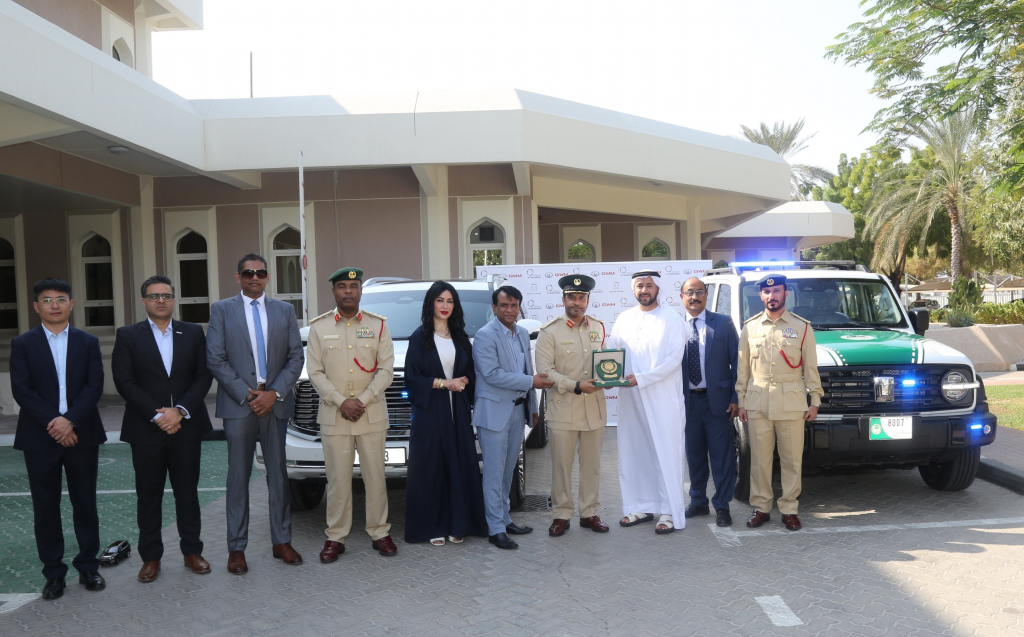
Tank is a car brand owned by Chinese automaker Great Wall Motors that specializes in SUVs. This brand is characterized by the introduction of cars specialized in four-wheel drive with high capabilities, including special off-road capabilities – and to suit the lovers of this type of car – the Tank brand maintains its special touches in terms of premium equipment, especially on the three-row family 500 series – the Tank brand with its range of cars is one of the brands that have distinguished itself in the Middle East markets, especially the Kingdom of Saudi Arabia. Tank 300 and Tank 500 join Dubai Police The Dubai Police General Command announced the addition of two new Tank 500 and Tank 300 vehicles to its traffic patrol fleet, in a move aimed at enhancing security and traffic capabilities and employing the latest smart technologies to support the public safety system in the emirate. Major General Saif Muhair Al Mazrouei, Acting Assistant Commander-in-Chief for Operations at Dubai Police, inaugurated the two new patrols during a ceremony attended by senior Dubai Police officials and representatives from Sweidan Al Nabooda, the strategic partner in this initiative, including Brigadier General Juma Salem Bin Sweidan, Acting Director of the General Directorate of Traffic, Lt. Lt. Juma Ahmed Salem, Head of Transport Department, Mr. David Sen, General Manager of Al Nabooda, Mr. Sunny Butt, Director of Sales and Marketing, Mr. Ajit Kumar, Director of Operations, Mr. Glenn Dacuna, Commercial Brand Manager, Ms. Ghufran Shamout, Sales Officer, and Mr. Ahmed Omar Al Nabooda. Major General Saif Al Mazrouei explained that the two new patrols will regulate traffic in the Emirate, enhance the security presence of police officers in tourist areas and vital locations, provide the highest levels of response to incidents and reports, and raise the level of security and traffic services provided to the public. The Tank500 and Tank300 patrols are characterized by the latest smart systems and artificial intelligence technologies, making them able to work effectively in various security and traffic tasks. This new addition is part of Dubai Police’s ongoing efforts to develop its security system, in line with Dubai’s status as a global city that provides the highest standards of security and safety for its residents and visitors. Tank 300 Tank 500 Maybe you’d like to read:

Tank 300 And 500 Join Dubai Police Fleet In The UAE Read More »

BYD Launches Shark Pickup in Panama

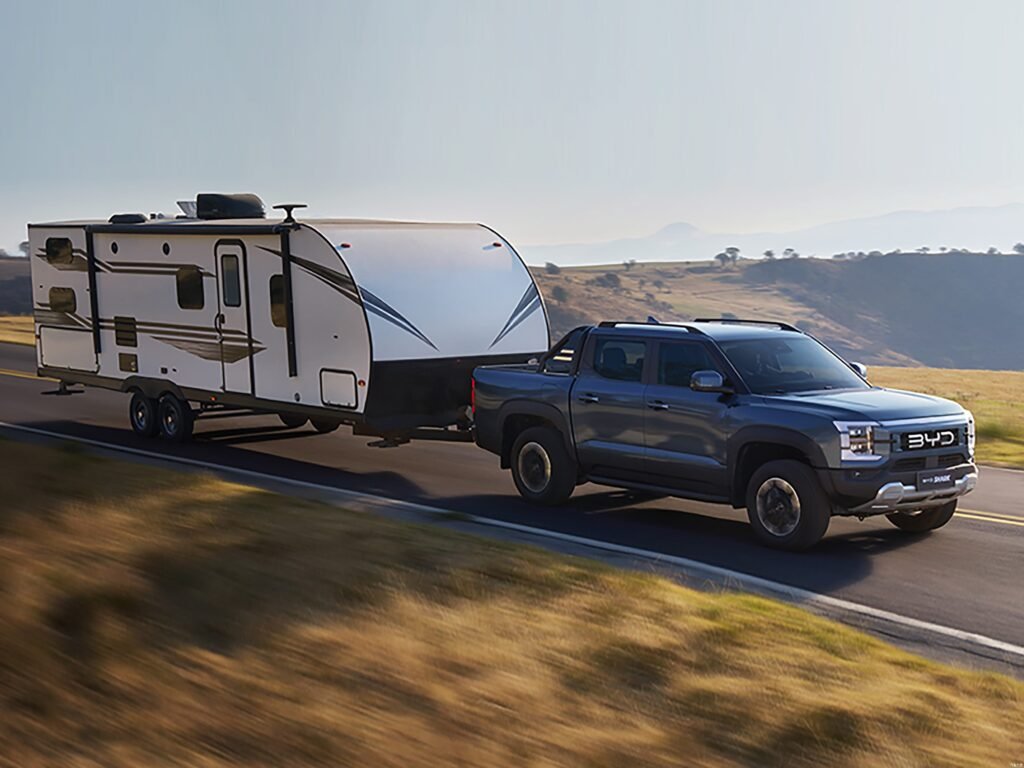
BYD has introduced the Shark hybrid pickup truck in Panama, marking its first hybrid model in the Latin American market. This launch comes as the pickup truck segment in Panama has experienced significant growth in recent years, according to Eduardo López de Victoria, general manager of BYD Central America and the Caribbean. The BYD Shark is designed to meet both business and personal needs, responding to the demand for a new mobility experience. Notably, the Shark was first launched in Mexico on May 14, a strategic move for BYD to debut a new model in an overseas market. Currently, the Shark is not available in China, likely due to stringent regulations on pickup trucks in urban areas. Built on BYD’s DMO platform—where “O” stands for off-road and “DM” for dual mode—the Shark measures 5,457 mm in length, 1,971 mm in width, and 1,925 mm in height, with a wheelbase of 3,260 mm. The pickup is equipped with dual electric motors: the front motor delivers 170 kW and 310 Nm of torque, while the rear motor produces 150 kW and 340 Nm of torque. Together, they generate over 430 horsepower, allowing the Shark to accelerate from 0 to 100 km/h in just 5.7 seconds, with a top speed of 160 km/h. It features a blade battery with a capacity of 29.58 kWh, offering an NEDC battery range of 100 kilometers and a combined NEDC range of 840 kilometers. At the launch event in Panama, BYD showcased the Shark in an outdoor camping scenario. Additionally, the company presented four battery electric vehicle (BEV) models—Tang, Yuan Plus, Seal, and Dolphin—at an auto show in Panama in October 2023, marking the introduction of its passenger vehicles in the country. BYD has opened two stores in Panama and plans to expand its sales channels to support the local transition to green transportation. Maybe you’d like to read:

BYD Launches Shark Pickup in Panama Read More »

Electric Vehicles in Armenia: 2024 Updates and Future Prospects

As the world shifts towards sustainable transportation, Armenia is experiencing significant growth in the electric vehicle (EV) market in 2024, supported by government initiatives, consumer awareness, and infrastructure advancements. Government Initiatives Boosting EV Adoption   The Armenian government has implemented various policies to promote EV adoption, including tax exemptions, reduced import duties, and subsidies for purchases. Investments in charging infrastructure are also underway, focusing on urban areas and major highways to support the increasing number of EVs. Market Trends and Consumer Preferences   Consumer preferences are shifting towards sustainable transportation, driven by environmental awareness and rising fuel prices. The market is seeing a variety of new EV models, with local dealerships expanding their offerings from compact cars to luxury SUVs, making EVs more accessible to different consumer segments. Challenges in the Armenian EV Market   Despite positive trends, challenges remain, such as the high upfront cost of EVs, which can still be prohibitive for many, especially in rural areas. Additionally, the limited charging infrastructure outside major cities poses a concern for potential buyers. Future Prospects for EVs in Armenia   The future of EVs in Armenia looks promising, with ongoing government support and technological advancements expected to drive market growth. As consumer adoption increases, manufacturers are likely to expand their offerings, making EVs more affordable and accessible. Conclusion In summary, Electric Vehicles in Armenia market is on the rise in 2024, bolstered by government initiatives and changing consumer preferences. While challenges exist, the outlook for EV adoption is positive, contributing to a more sustainable transportation system in the country. Maybe you’d like to read:

Electric Vehicles in Armenia: 2024 Updates and Future Prospects Read More »

Ethiopia, the world’s first country to ban the import of gasoline and diesel vehicles

Addis Ababa has prohibited the import of combustion-engine vehicles, compelling drivers to transition to electric vehicles in a country with just a single public charging station. In January, the Ministry of Transport and Logistics took a bold step of banning all imports of gasoline and diesel vehicles, thereby necessitating Ethiopian drivers to adopt electric vehicles. This unprecedented and astonishing decision comes despite the fact that less than half of the population has access to electricity. Yizengaw Yitayih, a senior climate expert at the ministry, explained that the rationale behind such a drastic regulation was “primarily an economic strategy. The directive primarily aims to assist us in rationalizing our foreign currency expenditures.” With a population of 120 million, Ethiopia faces a severe scarcity of foreign currency and is striving to decrease its reliance on gasoline and diesel imports, which are projected to surpass €6 billion by 2023, according to government statistics. Samson said, “Mandating Ethiopians to switch to electric vehicles allows the government to achieve dual objectives: reducing fuel imports and introducing a forward-thinking environmental policy.” Maybe you’d like to read:

Ethiopia, the world’s first country to ban the import of gasoline and diesel vehicles Read More »

Geely, Chery, and JAC Set to Establish Car Manufacturing Operations in Algeria

To fortify their presence in North Africa, Geely, Chery, and JAC have announced plans to establish car manufacturing facilities in Algeria. This was revealed by Li Jian, the Chinese Ambassador to Algeria. The move is a strategic response to Algeria’s import restrictions, which were implemented in 2023 to bolster the domestic automotive industry. Algeria’s economy has been on a decline for several consecutive years, prompting local authorities to adopt measures aimed at revitalizing the industry. By restricting automobile imports, the Algerian government hoped to incentivize car companies to set up manufacturing plants within the country. The strategy seems to be bearing fruit, as confirmed by the Chinese Ambassador, with three automakers now poised to assemble cars in North Africa. According to an interview with Li Jian, the three Chinese automakers — Geely, Chery, and JAC — will soon establish car manufacturing operations in Algeria. It is noteworthy that JAC already has a light truck KD plant in the country. In contrast, Geely and Chery do not have any industrial footprint in North Africa yet. While details about JAC’s upcoming manufacturing facility in Algeria remain scarce, Chery officials shared in November 2023 that they intend to build a plant in Bordj Bou Arreridji. This facility will initially have a production capacity of 24,000 units per year, which is expected to increase to 100,000 vehicles per year within the next three years. The factory will also serve as an export hub for other North African countries. Geely’s plans in Algeria were unveiled by its local partner, Sovidem. The company’s General Manager reported that the Chinese automaker intends to invest $200 million to construct an automotive assembly plant in the country. The plant is expected to have an initial production capacity of 50,000 units per year and will commence operations in 2026. The first model to be produced at the Geely Algeria plant will be the GX3 Pro, a small crossover that was launched in China in 2017 under the joint Livan (Ruilan) brand of Geely and Lifan. The GX3 Pro, which measures 4005/1760/1575 mm, is powered by a 1.5-liter naturally aspirated engine paired with a CVT, and is sold in various regions including Latin America, Central Asia, and Africa. Maybe you’d like to read:

Geely, Chery, and JAC Set to Establish Car Manufacturing Operations in Algeria Read More »

South Africa Mulls Tax Incentives and Subsidies to Propel Local EV Industry

On October 18, 2024, President Cyril Ramaphosa announced that South Africa is contemplating the implementation of tax incentives or subsidies for consumers to stimulate the purchase of electric vehicles, amidst the country’s transition towards a more industrialized automotive economy in Africa. Prominent global automakers such as Ford, Volkswagen, BMW, and Toyota produce models in South Africa for both domestic and European markets. Collectively, Britain and the European Union account for 46% of the vehicles manufactured in the country.Ramaphosa, speaking at an automotive industry conference, noted that the shift towards cleaner and more sustainable fuels, coupled with stringent regulations in key markets, is exerting pressure on global automakers to pivot towards electric and hybrid models. Consequently, South Africa’s automotive industry is positioning itself to capitalize on the burgeoning demand for new energy vehicles. To foster the production of electric cars within the country, Finance Minister Enoch Godongwana revealed in his February budget that the government will introduce an allowance for new investments from March 1, 2026. This allowance will permit producers to deduct 150% of eligible investment expenses related to electric and hydrogen-powered vehicles in the initial year. Maybe you’d like to read:

South Africa Mulls Tax Incentives and Subsidies to Propel Local EV Industry Read More »

MAXUS: Leading the way as the Premier Manufacturer Van Service Provider

As a brand, MAXUS is acutely aware of the challenges associated with transitioning to electric vehicles. To alleviate these difficulties, MAXUS has established a comprehensive business advisory service aimed at enlightening business owners and fleet managers about the advantages of EVs. This service also offers a pragmatic assessment of their current progress towards eco-friendlier transportation and outlines the necessary steps for their next moves. Accessible at every MAXUS dealership nationwide, this service equips customers with a meticulous, step-by-step roadmap to facilitate a seamless transition to electric vehicles. The exceptional quality of service rendered is among the compelling reasons why MAXUS was honored as the Best Manufacturer Van Service at the Business Vans 2024 Awards. Integral to this business advisory service, MAXUS collaborates intimately with customers seeking to adopt an electric fleet. This involves conducting local site assessments to ascertain that adequate supporting infrastructure, inclusive of charging stations, is in place to keep emission-free vans operational. Through MAXUS Intelligence Onboard telematics, dealerships can further empower businesses contemplating the switch to EVs by granting them access to crucial data. This includes comparisons of operational costs between EV fleets and their current internal combustion engine (ICE) vehicles, fuel efficiency metrics, the total cost of EV ownership, and the carbon emissions reduced by transitioning to electric vehicles. MAXUS stands by each customer, ensuring they are fully prepared to embark on the journey to electric motoring at their own pace. The brand adopts a customer-centric approach, offering a meticulous, step-by-step guidance system to guarantee a seamless transition to electric driving for every business. This distinctive offering is a hallmark of all MAXUS dealerships. Maybe you’d like to read:

MAXUS: Leading the way as the Premier Manufacturer Van Service Provider Read More »