June 2026 PHEV sales hit 236,000 units—BYD and Fang Cheng Bao dominate the leaderboard, securing all top 7 spots.
PHEV vs. BEV: A Tale of Two Powertrains
China’s new energy vehicle (NEV) market is increasingly a two-horse race. While battery electric vehicles (BEVs) continue to dominate the overall sales volume, plug-in hybrid electric vehicles (PHEVs) have carved out a substantial and fast-growing niche.
In June 2026, total PHEV sales reached approximately 236,000 units, accounting for 23.6% of the total NEV market . By comparison, range-extended electric vehicles (EREVs)—often grouped with PHEVs in consumer conversations—sold 75,000 units during the same period, highlighting a clear consumer preference for plug-in hybrids over range-extenders.
June 2026 PHEV Sales Snapshot:
| Powertrain Type | June Sales (units) | Share of NEV Market |
|---|---|---|
| PHEV | ~236,000 | 23.6% |
| EREV | ~75,000 | 7.5% |
Source: Provided market data
June 2026: Top PHEV Models by Monthly Sales
The monthly leaderboard shows fierce competition, with multiple models exceeding 10,000 units sold in June alone.
| Rank | Model | June Sales | Key Insight |
|---|---|---|---|
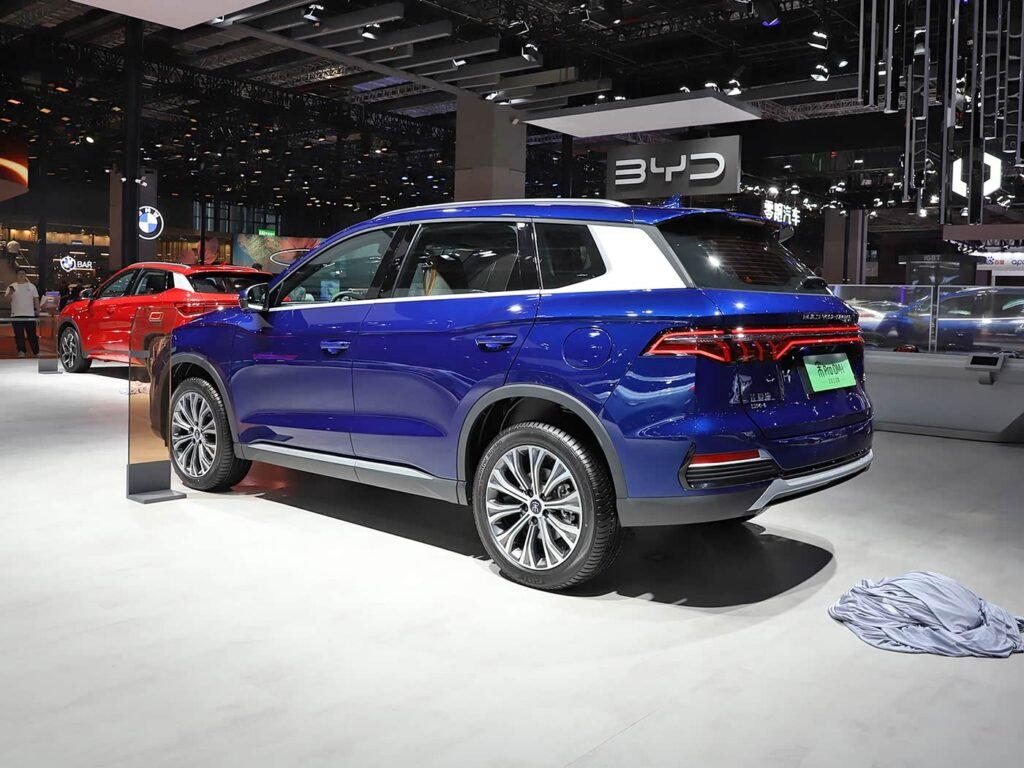
| 1 | BYD Song Pro DM-i | ~16,400 | Reclaims PHEV SUV top spot; affordable pricing + extensive dealer network |
| 2 | Fang Cheng Bao Tai 7 | ~14,900 | Rugged mid-large SUV; off-road styling + hybrid system draw |
| 3 | BYD Sealion 05 DM-i | ~11,300 | Youth-focused design; sporty aesthetics |
| 4 | BYD Qin PLUS DM-i | ~10,700 | Still the benchmark in the 100,000 RMB (~$13,800) PHEV segment |
| 5+ | Sealion 06 DM-i, Qin L PHEV | 5,000+ | Growing consumer choice with diverse offerings |
Top takeaway: BYD and its premium sub-brand Fang Cheng Bao secured all seven of the top seven positions in June’s PHEV leaderboard—a remarkable concentration of market power.
H1 2026: The Cumulative Champion
While June belonged to the Song Pro DM-i, the six-month cumulative race tells a different story.
| Rank | Model | H1 2026 Sales | Key Insight |
|---|---|---|---|
| 1 | Fang Cheng Bao Tai 7 | ~88,600 | Consistent monthly performance secures the half-year crown |
| 2 | BYD Song Pro New Energy | ~76,300 | Steady performer, remains a brand pillar |
| 3 | BYD Qin PLUS | ~51,600 | Value-for-money proposition holds third place |
Concentration at the top: Only three PHEV models surpassed the 50,000-unit threshold in H1 2026—a clear indication of headwistor market concentration.
Brand Concentration: BYD’s Unmatched Dominance
The numbers speak for themselves:
- Market share: In the June PHEV top-10 ranking, BYD and Fang Cheng Bao (both part of the BYD Group) occupied seven spots, capturing a 31.36% share of the PHEV segment .
- Complete podium sweep: These two brands claimed all of the top seven positions—no other brand cracked the upper tier.
This level of dominance mirrors BYD’s broader strategy of saturating every price point, from entry-level commuters (Qin PLUS) to rugged premium SUVs (Fang Cheng Bao Tai 7).
What’s Driving the PHEV Surge?
1. Price Accessibility
The Song Pro DM-i and Qin PLUS DM-i compete aggressively in the 100,000 RMB (~$13,800) price bracket—a critical sweet spot for first-time NEV buyers who remain range-anxious.
2. No Range Anxiety
PHEVs offer the best of both worlds: electric-only commuting with a gasoline backup. For Chinese consumers in less charger-dense regions, this is a decisive advantage over pure BEVs.
3. SUV Preference
Chinese buyers gravitate toward SUVs, and the Song Pro DM-i and Fang Cheng Bao Tai 7 capitalize on this trend with spacious interiors and commanding road presence.
4. Brand Trust
BYD’s extensive service network and proven battery technology (including the second-generation Blade Battery) build consumer confidence that newer brands struggle to match.
5. Rapid Product Refresh
New entrants like Galaxy Star 7 PHEV and Sealion 06 DM-i are already showing strong month-over-month growth, indicating that the segment is far from saturated. Product iteration cycles are accelerating.
BYD Group’s Dominance: A Broader Context
BYD Group’s PHEV success is part of a larger story. Across all powertrains in July 2026, BYD delivered 419,211 NEVs, including 233,105 BEVs and 177,967 PHEVs . The company’s PHEV lineup alone outsells many competitors’ entire NEV portfolios.
Comparison: BYD’s July PHEV sales (~178,000) already exceed the entire June PHEV segment’s top 4 models combined.
The group’s overseas expansion is equally aggressive—shipping 180,538 vehicles abroad in July, representing over 43% of total sales .
Implications for the Global Auto Industry
China’s PHEV market offers several lessons for global automakers:
- Hybrids are not a “transitional” technology—they are a mainstream choice with strong consumer demand.
- Brand concentration accelerates as market leaders leverage economies of scale, supply chain advantages, and brand loyalty.
- SUV-first product strategies outperform sedan-focused portfolios in the Chinese market.
- Price positioning matters enormously—the 100,000–150,000 RMB bracket is the volume battleground.
Market Outlook
While BEVs remain the long-term trajectory, PHEVs are proving resilient. With new models entering the segment monthly—and BYD’s dominance showing no signs of waning—the PHEV market is likely to maintain its ~23% share of total NEV sales through 2026.
Analysts are watching several trends:
- Will Fang Cheng Bao continue to expand its premium footprint?
- Can competitors like Geely, Changan, or Great Wall Motors break BYD’s stranglehold on the top rankings?
- How will new PHEV entrants from joint ventures (VW, Toyota, Honda) impact the competitive landscape?