Despite dominating global headlines, Chinese automakers are caught in a brutal price war—average profit margins have collapsed to just 1.5%.
The Paradox of China’s Auto Boom
If you follow automotive news, you’d be forgiven for thinking Chinese car manufacturers are the undisputed champions of the global industry. They’re outcompeting Japanese brands, outperforming German luxury marques, and flooding international markets with affordable electric vehicles.
But here’s the uncomfortable truth: for every $13,800 cars sold, Chinese automakers pocket only about $206 in profit.
According to the China Association of Automobile Manufacturers (CAAM), the average profit margin for vehicle manufacturing in the first five months of 2026 was a meager 1.5%. The industry’s financial health is so concerning that investors have labeled automotive stocks “boomer stocks,” with the broader auto index in steady decline. In just the first half of 2026, 17 listed Chinese automakers saw their combined market value plummet by $1.1 trillion.
If Everyone Is Losing, Who’s Winning?
This is the central paradox. While Western automakers like Volkswagen (mass layoffs), Honda (CEO shake-up), and Stellantis (reporting a $19 billion half-year loss) are publicly struggling, Chinese brands appear to be thriving on the surface. But when you look closer at the numbers, no one is truly winning in today’s Chinese auto market.
Chinese consumers might be getting incredible deals, but automakers—both foreign and domestic—are bleeding.
Does Launching New Cars Drive Sales?
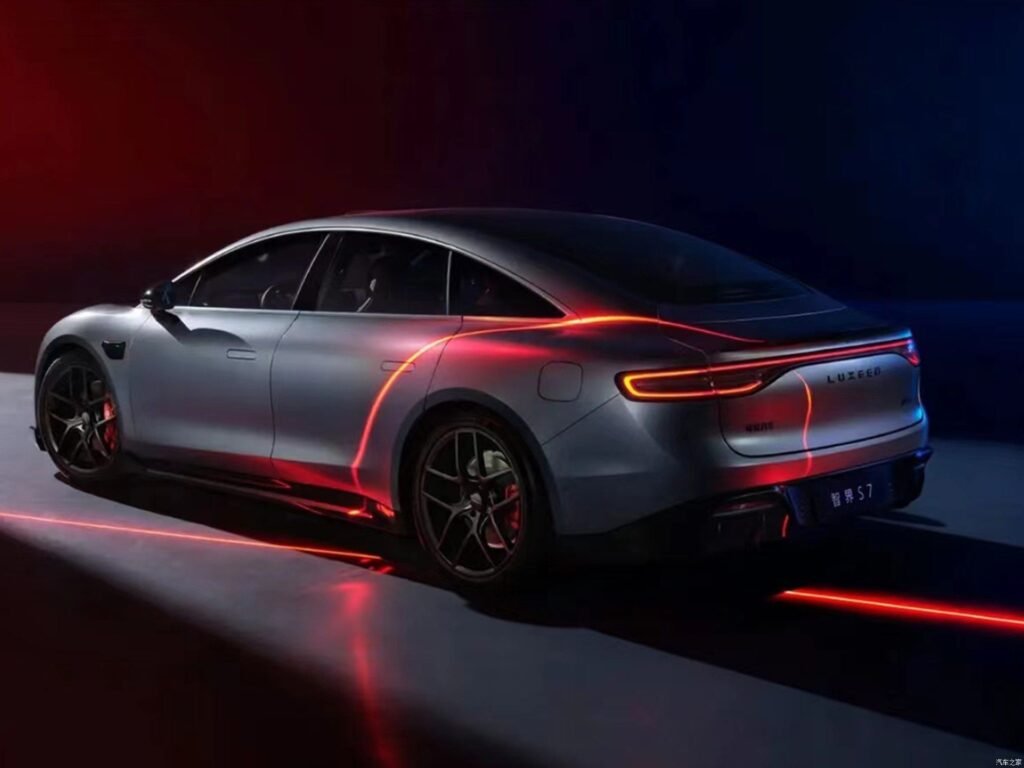
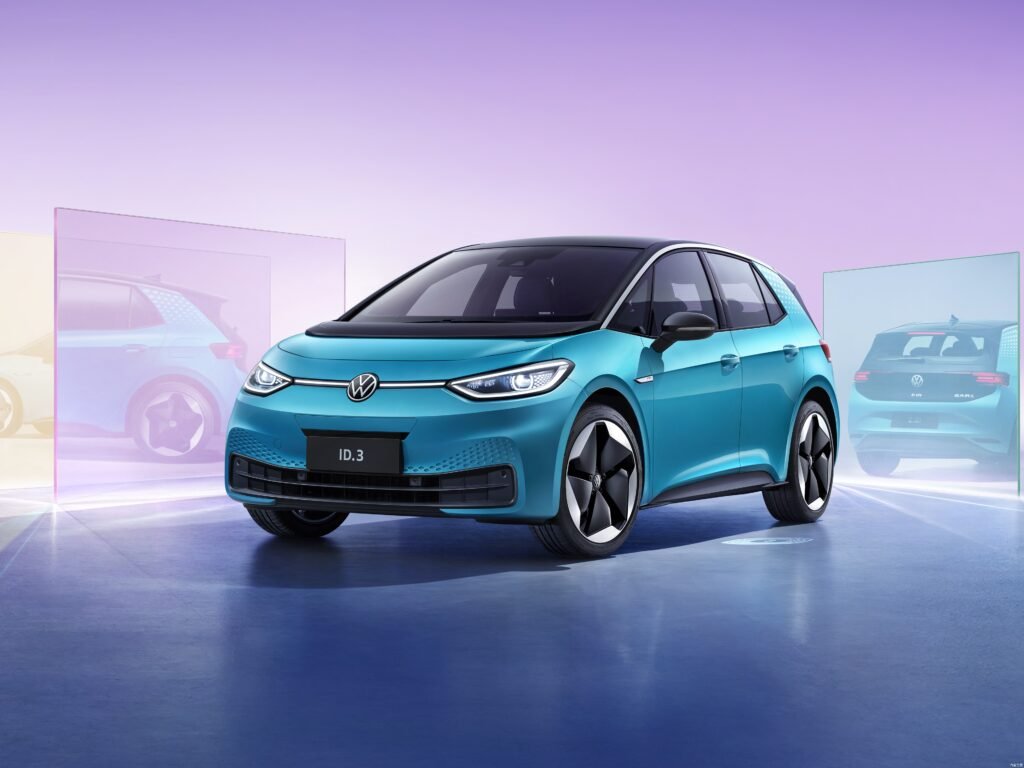
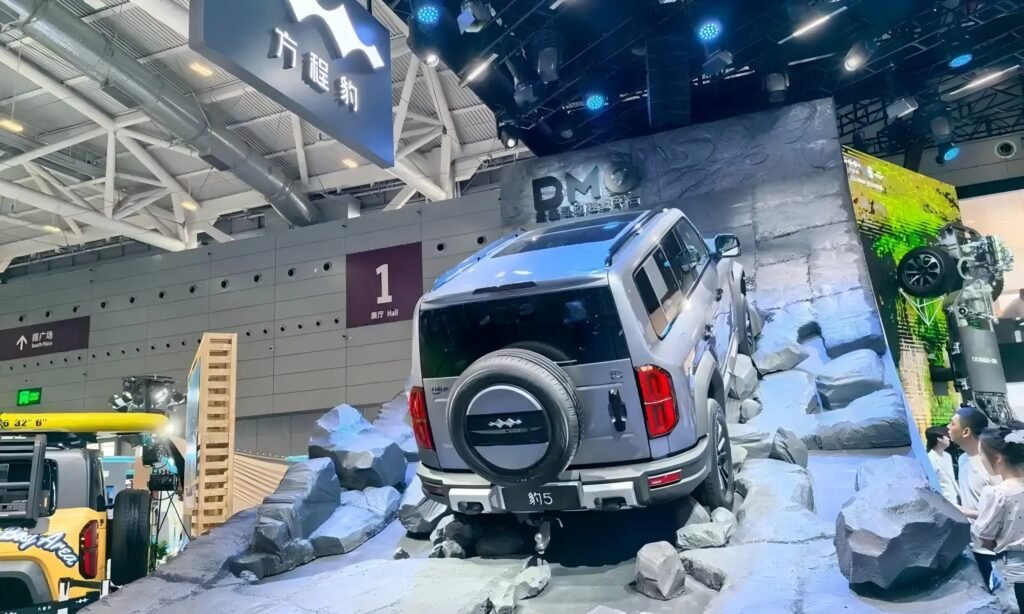
The industry is in a state of complete flux—think of it as the “Five Dynasties and Ten Kingdoms” period of automotive history. Every player is fighting for supremacy in a collapsing old order, and the primary weapon is an unrelenting blitz of new models.
The numbers are staggering:
- On July 16 alone, eight automakers held product launches.
- In the first half of 2026, the industry introduced 630 new models.
- That averages out to 3.5 new cars per day—essentially one new vehicle for every meal you eat.
Social media is rife with owners complaining about design flaws in their brand-new cars, only to be met with comments like, “Your model is already outdated—try next week’s new car.”
And yet, despite this unprecedented product onslaught, overall passenger vehicle sales in China fell 20% year-over-year in H1 2026.
The H1 2026 Sales Leaderboard: A Snapshot of Pain
| Rank | Brand | H1 2025 Sales | H1 2026 Sales | Growth |
|---|---|---|---|---|
| 25 | Fang Cheng Bao | 60,746 | 130,752 | +115% |
| 28 | NIO | 74,356 | 119,257 | +60% |
| 22 | Zeekr | 85,334 | 135,838 | +59% |
| 6 | Leapmotor | 194,653 | 260,193 | +34% |
| 15 | Xiaomi Auto | 157,926 | 185,055 | +17% |
| 19 | AITO | 147,700 | 162,740 | +10% |
| 26 | Deepal | 116,995 | 127,054 | +9% |
| 23 | GAC Aion | 136,579 | 134,827 | -1% |
| 29 | GAC Trumpchi | 113,698 | 110,492 | -3% |
| 20 | Changan Qiyuan | 148,587 | 144,244 | -3% |
| 14 | Li Auto | 203,938 | 193,472 | -5% |
| 9 | Tesla | 263,410 | 238,955 | -9% |
| 4 | Geely Auto | 473,056 | 399,796 | -15% |
| 18 | Buick | 193,838 | 163,545 | -16% |
| 3 | Toyota | 741,366 | 614,837 | -17% |
| 10 | BMW | 269,920 | 220,972 | -18% |
| 13 | Nissan | 245,916 | 200,029 | -19% |
| 11 | Audi | 269,920 | 218,303 | -19% |
| 24 | XPeng | 178,488 | 134,378 | -25% |
| 30 | Lynk & Co | 142,586 | 106,242 | -25% |
| 5 | Geely Galaxy | 519,728 | 378,708 | -27% |
| 2 | Volkswagen | 934,191 | 665,493 | -29% |
| 8 | Changan | 339,728 | 241,425 | -29% |
| 7 | Wuling | 360,187 | 247,226 | -31% |
| 16 | Chery | 263,500 | 178,305 | -32% |
| 17 | Mercedes-Benz | 250,684 | 169,280 | -32% |
| 27 | Haval | 183,071 | 121,227 | -34% |
| 21 | Hongqi | 209,677 | 137,799 | -34% |
| 12 | Honda | 314,409 | 205,321 | -35% |
| 1 | BYD | 1,471,288 | 795,726 | -46% |
Key observation: Only seven brands in the top 30 posted positive growth—and these were primarily Chinese new energy vehicle (NEV) startups. Meanwhile, 23 brands saw sales decline, with 7 of those dropping by more than 30%.
The Vanishing 5 Million: German and Japanese Brands in Freefall
The headline numbers tell only part of the story. To understand the scale of the disruption, you need to look back five years.
Japanese Brands: A 1.12 Million Unit Collapse (H1 only)
| Brand | H1 2021 Sales | H1 2026 Sales | Lost Volume |
|---|---|---|---|
| Toyota | 820,000 | 614,837 | ~205,000 |
| Honda | 780,000 | 205,321 | ~570,000 |
| Nissan | 540,000 | 200,029 | ~340,000 |
| Total | 2,140,000 | 1,020,187 | ~1,120,000 |
German Brands: A 1.07 Million Unit Collapse (H1 only)
| Brand | H1 2021 Sales | H1 2026 Sales | Lost Volume |
|---|---|---|---|
| Volkswagen | 1,250,000 | 665,493 | ~580,000 |
| BMW | 360,000 | 220,972 | ~140,000 |
| Audi | 370,000 | 218,303 | ~150,000 |
| Mercedes-Benz | 360,000 | 169,280 | ~190,000 |
| Total | 2,340,000 | 1,274,048 | ~1,070,000 |
Combined: German and Japanese automakers have lost 2.19 million units in just the first half of the year compared to 2021 levels. When you factor in year-end sales surges, industry analysts estimate these legacy brands have shed nearly 5 million annual sales in China over the past five years.
And the trend shows no signs of stabilizing. This explains the desperate restructuring measures—plant closures, mass layoffs, and executive reshuffles—being implemented across the board.
Did Chinese Brands Win?
Not yet.
The seven brands that posted positive growth in H1 2026 all had relatively small bases in 2025—typically around 100,000 units. Even Leapmotor, the strongest performer, still trails many legacy brands in absolute volume. Most of these rising stars have yet to crack the 200,000-unit mark.
Meanwhile, established Chinese automakers are suffering alongside their foreign rivals:
| Brand | H1 2026 Sales Drop | Lost Volume |
|---|---|---|
| BYD | -46% | ~680,000 units |
| Geely Galaxy | -27% | ~140,000 units |
| Changan | -29% | ~100,000 units |
| Chery | -32% | ~90,000 units |
The subsidy cuts and purchase tax adjustments have hit mass-market Chinese brands particularly hard. They’re squeezed between premium foreign brands on one side and aggressive domestic startups on the other.
The Endgame: Only Five Players Will Survive
This brutal environment recalls the “Hundred Regiments Offensive” of China’s internet sector—a period of intense, bloody competition where profits evaporate and only the most resilient survive.
XPeng’s CEO He Xiaopeng has predicted that only five automakers will ultimately remain standing in China’s consolidated market.
The question is: which Chinese brands will make it?
Factors That Will Determine Survivors:
- Profitability and unit economics—Can they sustain the 1.5% margin environment?
- Scale and supply chain efficiency—Can they leverage volume to reduce costs?
- Technology differentiation—Do they have proprietary battery, software, or autonomous driving advantages?
- Export capability—Can they generate profits in overseas markets to subsidize domestic price wars?
- Cash reserves and access to capital—How long can they burn through cash before reaching profitability?
What This Means for Consumers
For buyers, the current environment represents an unprecedented opportunity. High-quality vehicles are available at historically low prices, with automakers effectively competing on razor-thin margins.
But this phase is unsustainable.
As weaker players exit the market, pricing power will eventually consolidate, and margins—and prices—will likely rise. For now, consumers are enjoying the spoils of a hyper-competitive market, but the long-term sustainability of the entire ecosystem is in question.