ichelabamotor

Foton TUNLAND V9 Wins Third Place at the International Pickup Awards!

Recently, the FOTON TUNLAND V9 impressed judges at the International Pick-up Awards in Bulgaria, where it underwent rigorous testing by European Automotive Media Selection. Its exceptional off-road performance and reliable quality stood out in challenging conditions, earning it a highly commendable Third Place, showcasing its strong competitive edge in the global market.

Foton TUNLAND V9 Wins Third Place at the International Pickup Awards! Read More »

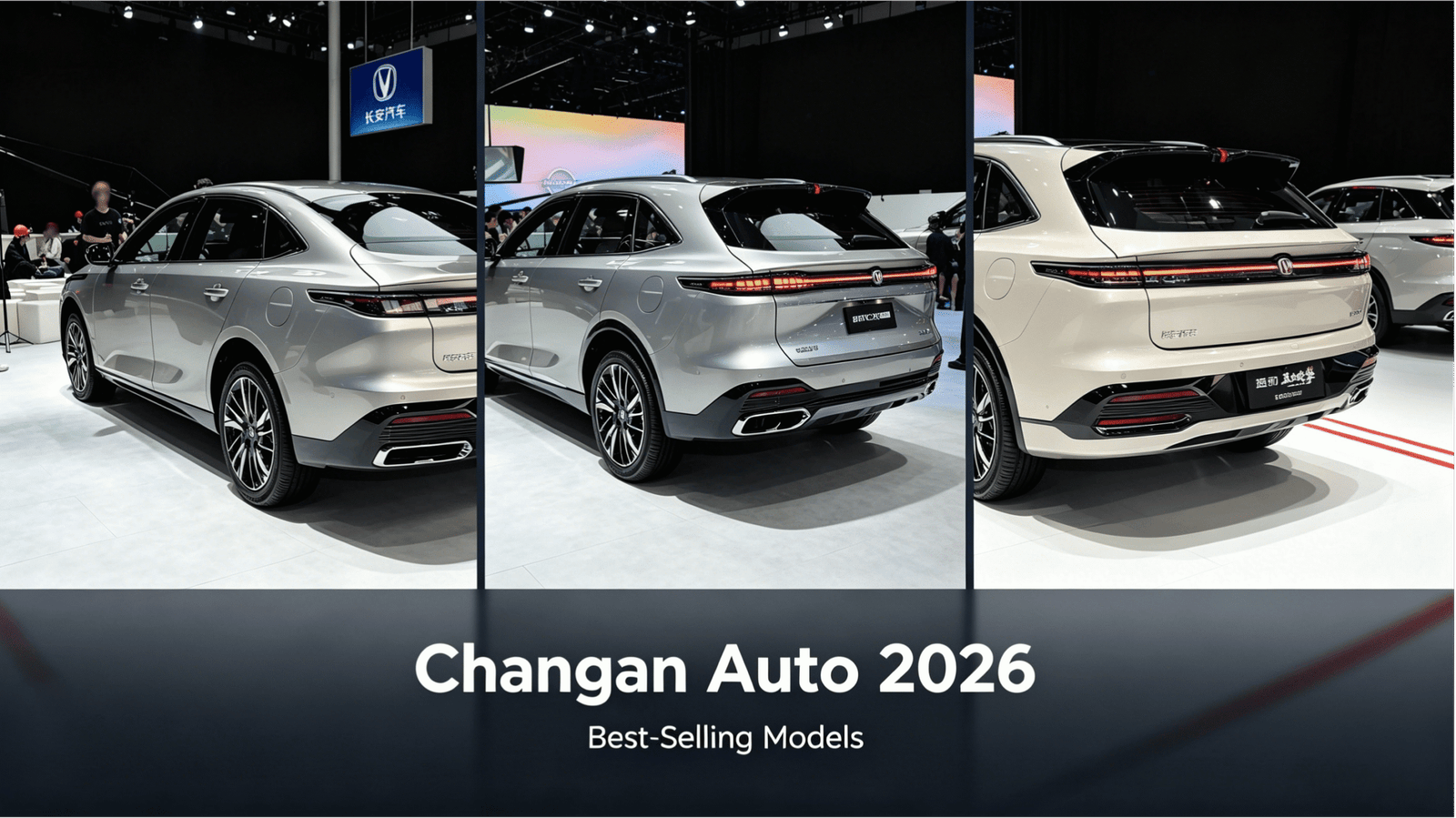
Changan new energy vehicles 2026

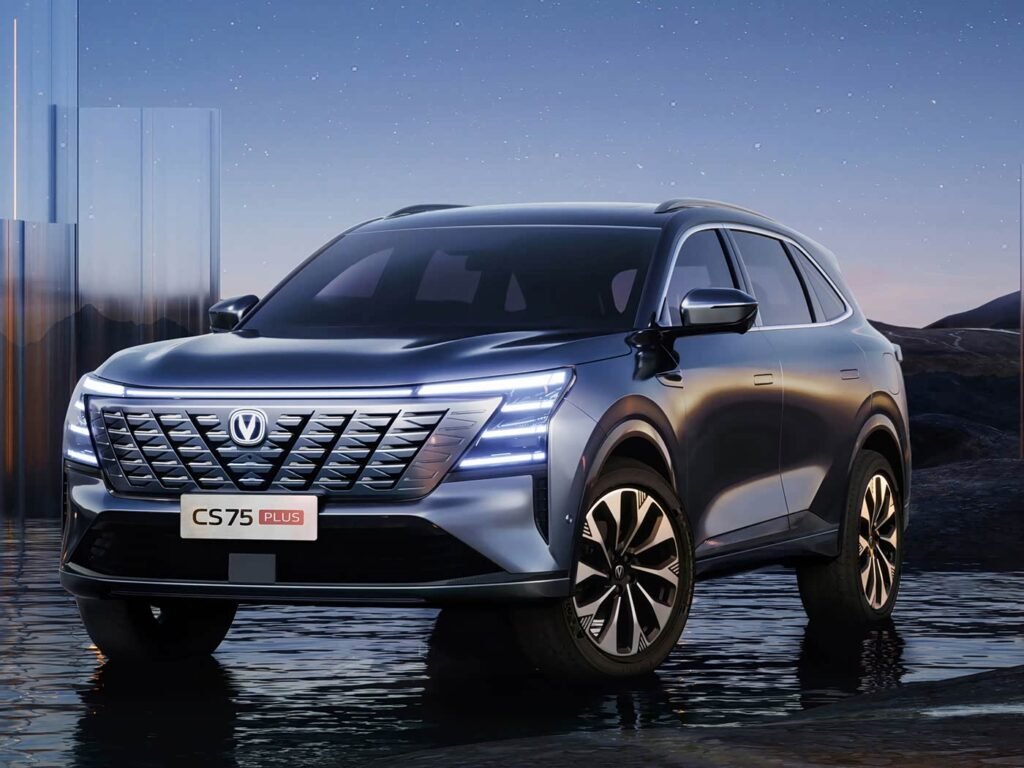
In 2025, Changan Automobile achieved a historic milestone, recording total sales of 2.913 million vehicles—an 8.5% year-over-year increase and its highest sales volume in nearly a decade. This remarkable growth was driven by the collective strength of its brand portfolio, including Changan Yinli, Changan NEVO, Deepal, and Avatr. More significantly, the company accomplished a strategic transformation from being an “incremental supplement” to a “core pillar” in the market, with new energy vehicle (NEV) penetration reaching unprecedented levels. This shift underscores the successful implementation of Changan’s “Shangri-La” NEV strategy and “Beidou Tianshu” intelligent driving initiative. A landmark development in July 2025 was the establishment of China Changan Automobile Group Co., Ltd. Registered in Chongqing with a registered capital of RMB 20 billion, the state-owned enterprise is directly supervised by the State-owned Assets Supervision and Administration Commission (SASAC) and focuses on smart automotive robotics, flying cars, embodied intelligence, and global expansion across five key regions: Southeast Asia, the Middle East and Africa, Central and South America, Eurasia, and Europe. Changan also celebrated the production of its 30-millionth vehicle in 2025. The journey from 10 million to 30 million units was achieved in just 11 years, reflecting the group’s accelerated growth and scaled, high-quality development. With Avatr solidifying its position in the premium segment and brands like Deepal, NEVO, and Yinli covering mainstream markets, Changan’s diversified brand strategy has proven highly effective. Overseas sales surpassed 600,000 units for the first time, supported by the launch of its Rayong plant in Thailand—a key step in transitioning from exporting products to establishing a global industrial presence. In intelligentization, Changan’s Beidou Tianshu plan evolved to its 2.0 version, achieving L3-level autonomous driving certification and enabling the large-scale application of intelligent technologies. Changan’s 2026 Vehicle Launch Roadmap Changan new energy vehicles 2026: Changan NEVOWith annual sales exceeding 411,000 units in 2025, Changan NEVO will introduce two volume-driven models in 2026: the mid-size SUV Q06 and a facelifted version of the A05 compact sedan. The brand aims to sell 550,000 vehicles in 2026. Deepal AutomotiveDeepal sold 333,000 units in 2025 and obtained L3 autonomous driving certification for its SL03 model. In 2026, Deepal will launch at least one all-new vehicle, with plans to release 30 models across sedans, SUVs, and off-road vehicles in the next five years. Avatr TechnologyAvatr delivered over 120,000 vehicles in 2025. For 2026, the brand will introduce a refreshed Avatr 12 sedan and two new models: the G618, a full-size six-seat SUV, and the D706, its first MPV. An Avatr 06 Touring version is also under development. Changan Yinli & Other Lineup UpdatesChangan Yinli sold 919,000 units in 2025. Key 2026 launches include facelifted versions of the Changan Yidong, UNI-V, and CS75 PLUS, along with a four-door edition of the Changan Lumin mini EV. Future Strategy: Dual-Driven Growth Looking ahead, Changan has outlined a clear “dual-driven” roadmap. From 2026 to 2028, the group will launch 43 new models, including 13 sedans, 20 SUVs, 1 MPV, 3 pickups, and 6 commercial vehicles. Over 80% of these will be NEVs, with the remaining models focusing on fuel efficiency. Globally, Changan plans to introduce 26 new models in more than 140 countries and regions. The company will continue investing over 5% of its annual revenue in R&D, focusing on intelligent driving, AI-powered cabins, next-generation batteries, and cutting-edge fields such as embodied AI robotics and flying cars.

Changan new energy vehicles 2026 Read More »

Best Chinese cars in Middle East 2025

Chinese automotive brands have gained strong recognition across the Middle East thanks to their high cost-performance ratio, reliability, and continuously improving quality. Based on export data and regional market performance, here are the most popular Chinese car models in the Middle East today: Chery Tiggo Series – The Tiggo 7 and Tiggo 8 are standout performers. The Tiggo 7 has been awarded “Best-Selling SUV” in Qatar for three consecutive years and remains a top-seller across the region. The Tiggo 8, available in both fuel and plug-in hybrid versions, is also highly popular due to its strong value and localized service network. Haval H6 – Great Wall Motor’s Haval H6 is a globally successful SUV and maintains high visibility and sales in the Middle East, making it a long-standing leader in the fuel-powered SUV segment. Changan CS75 PLUS – Widely favored in the Middle East, the CS75 PLUS is recognized as a champion in fuel SUV exports and remains a key competitor in the region’s conventional vehicle market. BYD Song PLUS DM-i – As the world’s top-selling plug-in hybrid, the Song PLUS DM-i has quickly penetrated the Middle East’s premium NEV market with its Blade Battery technology, long electric range, and high safety standards, becoming BYD’s sales pillar in the region. Jetour Traveler – Jetour (under Chery) has seen rapid growth in the Middle East with its Traveler model, which features rugged off-road styling and has recorded substantial year-on-year export growth. MG ZS – Although facing increased competition from NEVs in 2025, SAIC’s MG ZS retains a solid user base and sales presence in the Middle East, having once been China’s top export model. Tank 300 – Great Wall’s Tank 300 is a benchmark in the off-road segment, attracting a loyal following in the Middle East thanks to its robust performance and durability. Geely Binyue COOL – With its youthful design and agile handling, the Binyue COOL is particularly popular among younger Middle Eastern consumers, exporting over 50,000 units annually. Dongfeng Fengxing T5 EVO – Known in the region for its smart features and attractive pricing, the T5 EVO is a key export model for Dongfeng in the Middle East. BAIC BJ40 – As a representative Chinese off-road vehicle, the BJ40 holds a notable market share in the Middle East and is well-regarded among customers seeking reliable Off-road capability. It is important to note that the Middle East comprises diverse markets with varying consumer preferences and import policies. For example, the Tiggo 7 performs exceptionally well in Qatar, while the Tank 300 may be more popular in countries like Saudi Arabia.

Best Chinese cars in Middle East 2025 Read More »

Top 10 Chinese cars exported 2025

In 2025, China’s automobile export sector once again achieved extraordinary growth, with total exports reaching 8.324 million vehicles—a remarkable 30% year-over-year increase—further solidifying its pivotal role in reshaping the global automotive industry landscape. A Balanced Powertrain Strategy: ICEs as the Foundation, NEVs as the Growth EngineChina’s vehicle export mix demonstrates a well-balanced structure, characterized by “internal combustion engines (ICE) stabilizing the base, and new energy vehicles (NEVs) driving breakthroughs.” Conventional fuel models still account for about 40% of total exports, primarily targeting practical family transportation needs in emerging markets. Their spacious cabins and rich feature sets precisely meet local demands, forming a stable foundation for China’s global automotive expansion. Pure electric vehicles (BEVs) maintain strong momentum, representing nearly 30% of exports and continuing their rapid growth trend in recent years.The standout segment, however, is plug-in hybrid electric vehicles (PHEVs). Although their current share is smaller than those of ICE and BEV models, PHEVs are the fastest-growing category. By combining electric driving with fuel-based extended range, they effectively address range anxiety and have quickly gained traction in international markets, emerging as a powerful new growth driver for China’s NEV exports. This diversified powertrain approach not only ensures steady growth in export volume but also creates a complementary ecosystem where emerging and mature markets can adopt NEVs at their own pace. Global Reach: From Emerging to Developed MarketsChinese auto exports now cover a wide spectrum of markets, including both traditional emerging economies and developed regions. Major export destinations include Mexico, the UAE, Brazil, the United Kingdom, Australia, Belgium, and Saudi Arabia. The Middle East, in particular, holds significant potential. Countries such as the UAE and Saudi Arabia, with their strong demand for premium vehicles and commitment to energy transition, have become key markets for Chinese NEVs. Chinese automakers are successfully introducing high-end, intelligently equipped electric models tailored to local preferences, rapidly earning consumer recognition. Top 10 Best-Selling Chinese Cars Overseas in 2025Here are the top 10 most exported Chinese car models in 2025, leading the charge in the global market: Competitive Edge: Cost Efficiency Without Compromising QualityCost competitiveness remains a key strength for Chinese auto exports. Through economies of scale, optimized supply chains, and continuous improvements in manufacturing processes, Chinese automakers can maintain high product quality while controlling production costs. This advantage allows Chinese vehicles to offer compelling value in competitive international markets. Looking ahead, China’s automotive industry is poised to make even greater breakthroughs worldwide, providing global consumers with more high-quality, innovative, and value-driven mobility choices.

Top 10 Chinese cars exported 2025 Read More »

The Ultimate Guide to Automotive Parts & Accessories: A Complete Classification

Welcome to the most comprehensive guide on automotive parts and accessories. Whether you’re a car enthusiast, a DIY mechanic, or simply a vehicle owner looking to understand your car better, this Ultimate Guide to Automotive Parts & Accessories will walk you through every essential category. From the engine to the exterior trim, we’ve organized and explained the key components that keep your vehicle running smoothly, safely, and in style. 1. Engine Parts – The Heart of Your Vehicle Engine parts form the core power system of any automobile. 2. Transmission System Parts – Transferring Power These components deliver engine power to the wheels efficiently. 3. Braking System Parts – Your Safety Priority Critical for vehicle control and safety under all driving conditions. 4. Steering & Suspension Parts – Control and Comfort These systems work together to ensure stable handling and a smooth ride. 5. Electrical & Ignition Parts – The Vehicle’s Nervous System Manages power distribution, starting, and electronic functions. 6. Exhaust System Parts – Emissions and Performance Channels exhaust gases away from the engine while reducing noise and pollution. 7. Fuel System Parts – Delivering Energy Stores and supplies fuel to the engine in a controlled manner. 8. Cooling System Parts – Preventing Overheating Regulates engine temperature to prevent damage from excessive heat. 9. Interior Parts & Accessories – Comfort and Convenience Enhances the cabin experience for drivers and passengers. 10. Exterior Parts & Accessories – Style and Protection Adds aesthetic appeal and functional protection to the vehicle’s exterior. 11. Lighting & Visibility Parts – Safety in Illumination Ensures clear visibility and communication with other road users. 12. Tires & Wheels – Where the Road Meets the Vehicle The only point of contact between your car and the road surface. 13. Tools & Maintenance Essentials – For Upkeep and Repairs Equipment needed for routine maintenance and emergency repairs. 14. Fluids, Lubricants & Chemicals – Keeping Systems Flowing Essential liquids that keep mechanical components operating smoothly. 15. Safety & Security Accessories – Protection Inside and Out Designed to safeguard occupants and prevent theft. 16. Performance Upgrades – Boosting Power and Handling For enthusiasts seeking improved speed, power, or driving dynamics. Why This Ultimate Guide to Automotive Parts & Accessories Matters Understanding these categories helps you: Bookmark this Ultimate Guide to Automotive Parts & Accessories as your go-to reference. Whether you’re troubleshooting an issue, planning a modification, or simply satisfying your curiosity, knowledge is the key to better car ownership.

The Ultimate Guide to Automotive Parts & Accessories: A Complete Classification Read More »

The 3-Minute Winter Warm-Up: A Hybrid Owner’s Guide to Saving Fuel & Protecting Your Car 

Winter mornings at -20°C present a familiar dilemma for drivers. Owners of traditional gasoline vehicles might let their engines idle for five minutes, while some hybrid drivers believe the modern myth: “Hybrids don’t need to warm up.” Both approaches can be costly. The first wastes fuel, and the second risks long-term damage to your hybrid’s most critical components. The truth is, hybrid vehicles have a unique “warm-up” logic. It’s not just about the engine; it’s about achieving harmonious cooperation between the engine and the battery pack in freezing conditions. Why Cold is the Enemy: Engine Oil & Battery Chemistry In deep cold, engine oil thickens like honey, struggling to lubricate vital parts. Simultaneously, your hybrid’s lithium-ion battery suffers from reduced chemical activity, lowering its power output and efficiency. Starting off aggressively in this state can lead to increased engine wear and put unnecessary strain on the battery, subtly shortening its lifespan. The Smart Hybrid Warm-Up: “Warm by Moving, Not Just Waiting” Fortunately, your hybrid’s intelligent computer system is designed for this. When the coolant is below 40°C, the engine may run at a higher idle (around 1200 RPM) while the electric motor assists for smooth, efficient initial movement. Crucially, the system uses engine heat to warm the battery, helping it recover optimal performance. The key is to avoid the two extremes: never stomp on the accelerator when cold, and avoid prolonged idling. Idling burns fuel inefficiently, leading to carbon buildup, while a cold, hard acceleration forces the engine to work with poor lubrication. Your Actionable 3-Minute Routine Follow this simple, science-backed routine to protect your investment: Pro-Tips for the Savvy Hybrid Owner In summary, the hybrid winter mantra is: Pause briefly, drive gently, heat smartly. By understanding and trusting your vehicle’s intelligent systems, you move beyond old gasoline-era habits. You’ll ensure your hybrid operates efficiently, durably, and safely all winter long—protecting both your wallet and your vehicle for countless journeys ahead.

The 3-Minute Winter Warm-Up: A Hybrid Owner’s Guide to Saving Fuel & Protecting Your Car  Read More »

The 4 Types of People Still Choosing Gas Cars in 2026 (And Why They’re Right for Their Lifestyle)

By 2026, electric vehicles (EVs) have become a familiar sight on city streets and highways. They’re no longer just the future—they’re very much the present. Yet, despite the buzz, advertising, and rapid adoption, one thing remains clear: gas-powered cars haven’t disappeared. In fact, a significant number of buyers still consciously choose them. Why? After talking to drivers, industry observers, and everyday commuters, I’ve found that most people sticking with internal combustion engines in 2026 fall into four clear categories. They aren’t resisting change—they’re making thoughtful, practical decisions based on their own needs. 1. The Long-Distance Driver: “Time is Everything.” Meet the project managers, sales reps, and road-trippers who regularly drive hundreds of miles. For them, EV range specs on paper don’t always translate to real-world convenience. “A 500-km claimed range sounds great,” one project manager told me, “but reliable fast-charging off major highways is still hit-or-miss in smaller towns.”Meanwhile, gas stations are like old friends—always around the corner. A 5-minute refuel means less downtime, no holiday charging queues, and total peace of mind when the schedule is tight. For them, efficiency isn’t just about energy—it’s about time. 2. The Urban Dweller Without Home Charging Not everyone has a dedicated parking spot or the ability to install a home charger. Relying solely on public charging changes the EV value proposition dramatically. Public chargers can be occupied, broken, or priced much higher than residential electricity. The “wake up to a full tank” advantage disappears, and the cost savings shrink. For these drivers, the familiar routine of stopping at a gas station—5 minutes, pay, and go—still feels like freedom. Data shows over 80% of people without fixed charging access prefer gas cars. It’s a straightforward case of lifestyle defining the tool. 3. The Driving Enthusiast: “It’s About the Soul, Not Just Speed.” Electric cars are quick, smooth, and quiet—and for some, that’s exactly what’s missing. There’s a visceral thrill in the rumble of an engine, the feedback through the pedal, the shift of gears. One friend put it perfectly while revving his naturally aspirated coupe: “This isn’t just movement—it’s a conversation with the machine.” For enthusiasts, driving is emotional. And for now, many still find that emotion in traditional powertrains. 4. The Total-Cost Realist Savvy buyers look beyond the sticker price or fuel cost per mile. They consider depreciation, maintenance, and long-term ownership expenses. While EVs can be cheaper to “refuel,” their higher upfront cost, uncertain battery longevity, and expensive out-of-warranty repairs can tilt the math. Gas cars, on the other hand, often come with generous discounts, mature service networks, and predictable maintenance schedules. “I did the math over five years,” one buyer explained. “With my driving pattern and no home charging, the gas car was actually more economical overall.” For them, it’s not ideology—it’s spreadsheet logic. The Big Picture: It’s About Fit, Not Fashion These four groups aren’t rejecting progress. They’re simply matching the vehicle to their reality: EV technology will keep advancing. Charging networks will expand. But for now—and likely for years to come—these practical, personal, and economic factors will keep gas cars relevant. Your car should fit your life, not the trend. Whether you choose electric or gas in 2026, the right answer depends on your daily rhythm, your priorities, and what brings you joy on the road. Meta Description: Wondering why people still buy gas cars in 2026? Discover the 4 types of drivers who choose fuel over electric—based on logic, lifestyle, and long-term value.

The 4 Types of People Still Choosing Gas Cars in 2026 (And Why They’re Right for Their Lifestyle) Read More »

5 Electric Vehicle “Secrets” That Extend Range, Save Money & Battery Life (Without the Anxiety)

Do you worry about your EV’s winter range, battery degradation, or high running costs? What if you could solve these common concerns without spending extra? Drawing from real-world owner experience, this guide reveals practical, no-cost habits that can significantly boost your electric vehicle’s efficiency and longevity. 1. Banish “Range Halving” in Winter The Reality: Cold weather can drastically reduce range, turning a 520km full charge into 280km overnight.The Proactive Fix: Counteract the cold with a simple “Winter Trio”: 2. Smooth Driving: Your Wallet’s Best Friend The Test: Driving the same route gently vs. aggressively resulted in 13.7 kWh/100km vs. 25.3 kWh/100km—a near doubling of energy use!The Smart Habit: 3. Battery Care: It Thrives on Routine, Not Coddling The Myth: “EV batteries die in three years.”The Data: After three years, real-world battery degradation was only 7.7% (approx. 2.5% per year), well below the common warranty threshold of 20% over 8 years.The Golden Rule: ABC—”Always Be Charging” Smartly: 4. Taming the Climate Control “Power Hog” The Challenge: Cabin heating and cooling draw directly from the battery, consuming 2-4 kW.The Strategy: 5. The “Hidden” Range Booster: Tire Pressure The Discovery: A drop from 2.5 bar to 2.1 bar caused a 15km range loss. Correcting it immediately restored efficiency.The Habit: Make a monthly tire pressure check part of your routine. Conclusion: Your EV, Optimized Electric vehicles aren’t magical, but they are highly responsive to good habits. By integrating these five principles—preconditioning, smooth driving, smart charging, efficient climate control, and tire maintenance—you transform range anxiety into range confidence.Stop worrying about winter shortfalls or battery decay. The key to unlocking your EV’s full potential is already in your hands. Master these simple steps, and watch your vehicle become a more reliable, economical, and enjoyable partner for every journey.

5 Electric Vehicle “Secrets” That Extend Range, Save Money & Battery Life (Without the Anxiety) Read More »

Is the Changan UNI-K worth buying?

Having driven for over a decade and encountered many Chinese SUVs, I’ve recently received a lot of questions about the Changan UNI-K‘s value. Based on experience, this car isn’t a simple “blind buy”; it needs to be considered in conjunction with your actual needs. Below, I’ll share my test drive experience and owner feedback to highlight the key points. The 2890mm wheelbase is not an exaggeration. Rear legroom easily fits three fists, and the 1.9-meter trunk depth can comfortably accommodate a stroller and suitcase. Hidden storage compartments under the center console can fit backpacks, and the trunk’s hidden compartments can hold valuables—these details are very practical for families. The entire series features a 2.0T engine paired with an 8-speed automatic transmission, delivering 390 N·m of torque at just 1900 rpm, providing ample power for highway overtaking. The WLTC combined fuel consumption is 8.3L/100km, and my actual highway test showed 6.8L/100km (below 110km/h), which is quite good for a mid-size SUV. The entry-level version includes L2 assisted driving and a 540° camera, offering excellent value for money. However, occasional delays in the infotainment system are mainly concentrated in the higher-spec AR navigation version. If your budget is limited, the basic version is a safer choice. The full-body soundproof glass and active noise cancellation are indeed impressive, controlling wind noise better than competitors in the same price range below 120km/h. However, the 21-inch wheel version uses Hankook sport tires, which produce more noticeable tire noise. If comfort is a priority, 19-inch or 20-inch wheels are more suitable. Compared to the Geely Xingyue L and H6, the UNI-K has the longest wheelbase, offering a clear space advantage. The standard Sony audio system and hidden door handles are distinctive features in this price range. However, the infotainment system isn’t as smooth as the Geely Xingyue L, which is something to keep in mind. Based on years of experience, the UNI-K is suitable for two types of people: first, families with a moderate budget, where the two-wheel-drive Comfort model offers the best value; second, young people who like advanced technology, where the Enjoy model’s headrest speakers and streaming rearview mirror provide a good experience. If you frequently drive on rough roads, the four-wheel-drive version’s on-demand four-wheel drive and central differential lock can handle light off-roading.

Is the Changan UNI-K worth buying? Read More »

Changan Automobile’s New Energy Vehicle Sales Exceed 1 Million Units

On December 20th, China Changan Automobile Group announced that its annual sales of new energy vehicles had exceeded 1 million units. Currently, Changan’s new energy brands include Avita, DeepBlue Auto, and Changan Qiyuan. In November, Changan Automobile’s total sales reached 283,000 units, a year-on-year increase of 2.3%. Among them, new energy vehicle sales reached 125,000 units, a year-on-year increase of 23%. On December 10th, China Changan Automobile celebrated the production of its 30 millionth Chinese-brand vehicle. Zhu Huarong, Chairman of China Changan Automobile, previously stated that Changan will be guided by the concepts of “New Energy Shangri-La,” “Intelligent Technology Beidou Tianzhu,” and “Globalization,” continuously developing its three major new energy brands: Avita, DeepBlue Auto, and Changan Qiyuan. The company is committed to transforming into an intelligent and low-carbon mobility technology company, striving to achieve 5 million units in total vehicle production and sales by 2030. Of these, new energy vehicles will account for over 60%, and overseas sales will account for over 30%.

Changan Automobile’s New Energy Vehicle Sales Exceed 1 Million Units Read More »

Unshakable Support on the Rails: The Iveco Daily, A Pillar of Railway Emergency Repair

At a railway emergency repair site where every second counts, the rapid and secure transport of critical materials to the core area is the lifeline to restoring operations. This demands professional engineering vehicles with unparalleled reliability, robust power, and ultimate safety. The Iveco Daily engineering vehicle is meticulously engineered to meet these severe challenges. Core Strengths, Tailored for Professional Scenarios Versatile Platform, A Comprehensive Partner The exceptional adaptability of the Iveco Daily platform extends its value far beyond a single sector. In addition to railway engineering, its proven reliability is widely utilized and validated across diverse industries such as efficient logistics, specialized medical transport, and municipal services. Its distinctive front-end design also conveys the strength and unique character of a professional vehicle. Looking ahead, Nanjing Iveco will continue to uphold its professional ethos, deepening its expertise in the special-purpose vehicle sector. Through continuous technological innovation and full lifecycle services, we are committed to meeting the diverse and high-standard needs of various industries worldwide, working hand-in-hand with our partners to create a more efficient and safer future.

Unshakable Support on the Rails: The Iveco Daily, A Pillar of Railway Emergency Repair Read More »

FOTON’s Tunland V series entered the Australian market, with its first hybrid full-size pickup marking the beginning of a new era in intelligent off-roading

Recently, FOTON held a product launch event in Australia, officially introducing the new Tunland V series hybrid pickups to the local market. The lineup includes the practical Tunland V7, designed for utility-focused scenarios, and the high-end Tunland V9, aimed at both family and professional users. As FOTON’s first full-size pickup equipped with a hybrid powertrain, the Tunland V series stands out with its high performance, low fuel consumption, and cutting-edge intelligent features. The entire lineup is powered by FOTON’s latest 48V turbocharged diesel hybrid system, paired with a 2.0L AUCAN engine and an 8AT ZF transmission. This configuration delivers a maximum power output of 120 kW and a peak torque of 450 Nm. Thanks to its advanced energy recovery system and ultra-high-pressure combustion technology, the series achieves a 10% reduction in overall fuel consumption, with thermal efficiency reaching up to 50%. It offers strong performance while fulfilling commitments to energy efficiency and emissions reduction. In terms of intelligence and comfort, the Tunland V series sets a new benchmark in its class. The cabin comes standard with a 14.6-inch intelligent entertainment touchscreen, a customizable digital instrument panel, synthetic leather seats, dual-zone automatic climate control, and wireless charging, creating a driving experience on par with luxury sedans. Overall, NVH performance has been improved by 15%, further enhancing driving quietness. In terms of safety, the Tunland V series meets European safety standards and is equipped with comprehensive active and passive safety features, including 8 airbags, a 360° panoramic camera, lane departure warning, and an electronic stability control system. It also supports an L2.5-level intelligent driving assistance system, covering key functions such as ACC adaptive cruise control, AEB automatic emergency braking, and lane-keeping assist. All these features have undergone road testing and specific calibration for the Australian market. In terms of product positioning, the Tunland V7 features a leaf spring suspension, emphasizing durability, reliability, and cost-effectiveness. The Tunland V9, on the other hand, is equipped with a coil spring multi-link suspension, offering enhanced ride comfort, interior quality, and intelligent tech features. It caters to both family travel and professional needs, redefining the lifestyle and design standards for full-size pickups. At the launch event, FOTON announced its deep connection with local sports culture by officially sponsoring the fifth season of the Australian sports show Search 4 Hurt. Through supporting passionate and dynamic local content, FOTON aims to further integrate into the Australian community and build emotional resonance with consumers. Currently, the show has garnered over 7 million views across various platforms, while the FOTON Australia website sees more than 6,000 visits per week, and over 1,000 people have booked test drives. After the launch event, many industry clients visited to explore the new products and participated in test drives, technical exchanges, and other activities. Through hands-on experience, clients expressed full appreciation for the Tunland V’s driving space, exceptional performance, and intelligent technology. The Tunland V series has successfully launched in multiple global markets, including Europe, Africa, and the Americas, earning an excellent reputation and strong user recognition due to its outstanding product quality. With the full-scale launch in the Australian market, FOTON will continue to provide local users with more efficient, intelligent, and environmentally friendly pickup solutions.

FOTON’s Tunland V series entered the Australian market, with its first hybrid full-size pickup marking the beginning of a new era in intelligent off-roading Read More »