The noise at the 2026 Beijing Auto Show wasn’t just about shiny new concept cars. Walk through the halls, and you could feel something heavier: a deep-seated anxiety about evolution and a fundamental restructuring of the global auto industry.
The Chinese car market is a study in contradictions right now. Export records are being broken, yet a brutal price war is raging at home. The auto show is 70% larger than two years ago with over 200 new car launches, yet automakers are struggling to turn a profit as product cycles shorten to a breaking point.
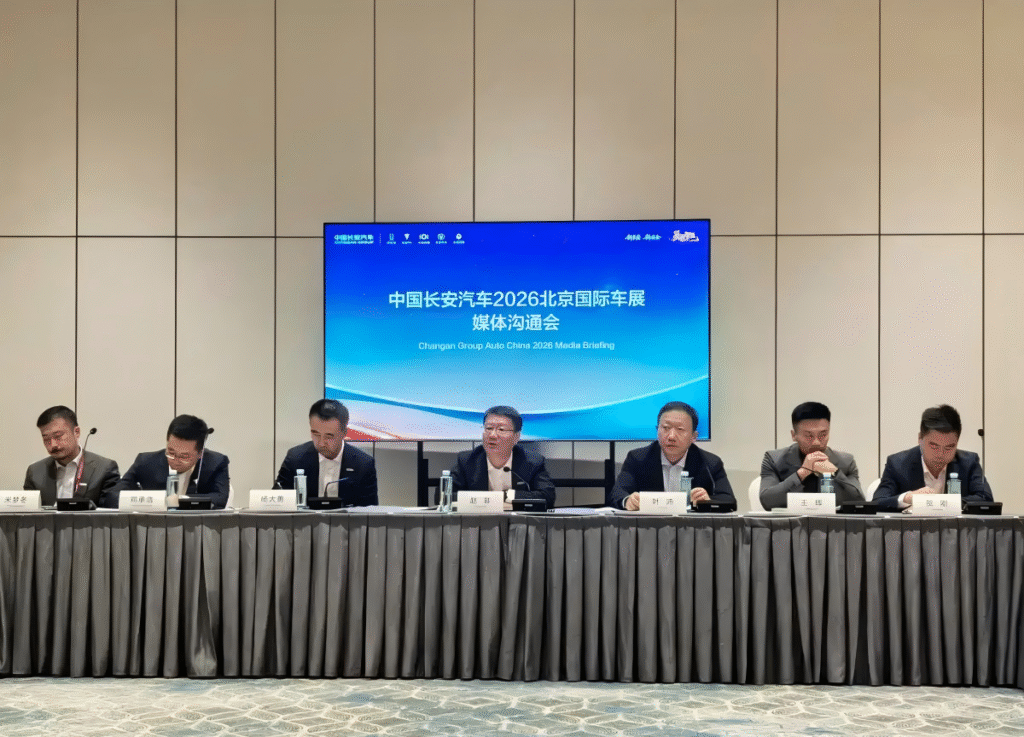
In the middle of this chaos, Changan Auto held a media roundtable that cut through the hype. Their message wasn’t just about their own “1445 Strategy”—it was a hard forecast for the next five years. Their conclusion? Powertrain type is no longer the deciding factor. The real tickets to the global top tier are efficiency at scale and deep, full-industry-chain globalization.
The Logic Behind the AVATR and Deepal Synergy
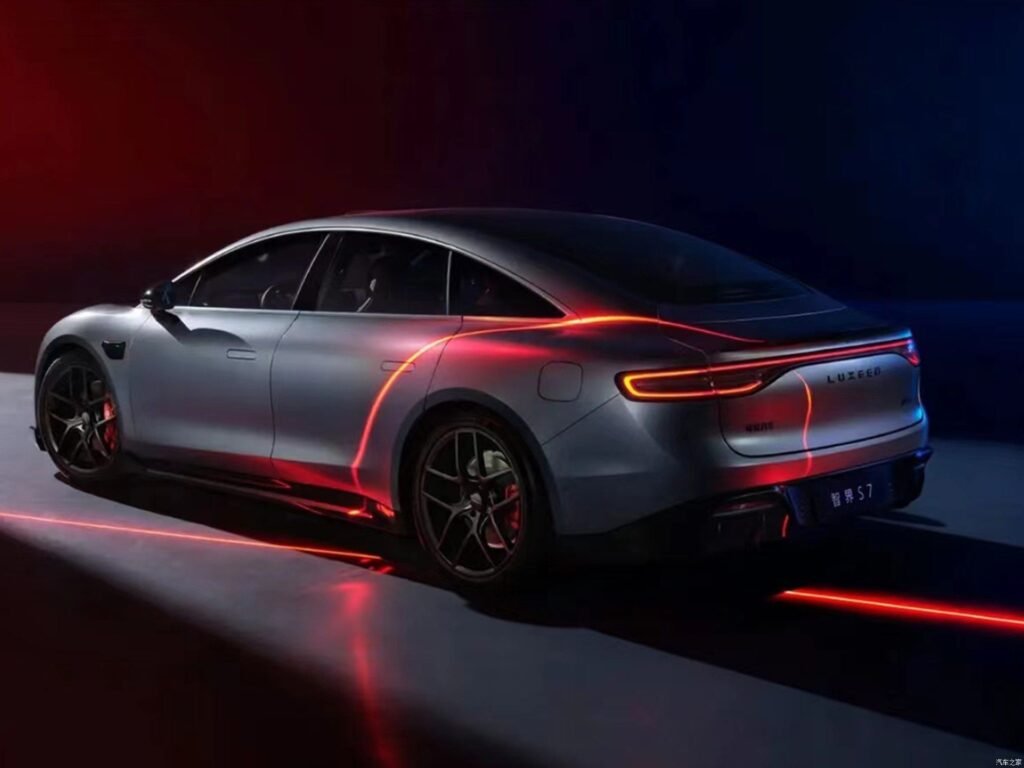
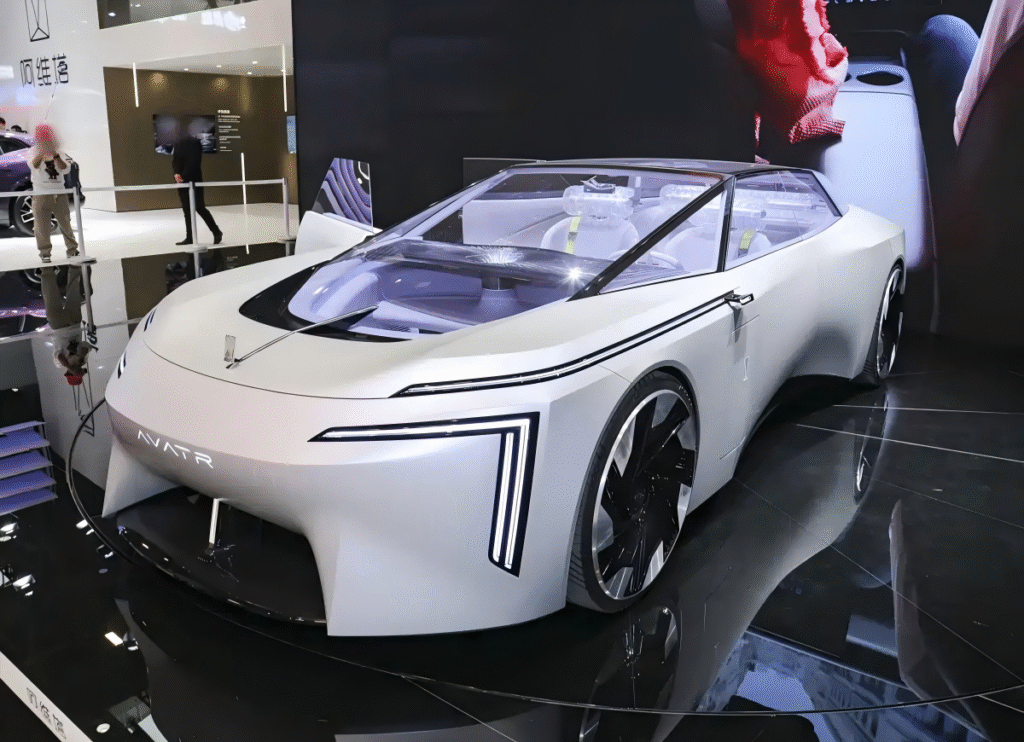
The biggest news from Changan was the strategic integration of its two main premium NEV brands: AVATR and Deepal.
Why? In 2025, Changan sold 2.913 million vehicles, an 8.5% increase—a near-record high. But as Changan Auto’s General Manager, Zhao Fei, put it: by 2030, the top 15-20 global automakers will control 80% of the market. In this new reality, 3 million units is just the entry ticket to survive. 5 million means you’re doing well. To crack the global Top 10, you need 8 to 10 million in annual sales.
This is the hard math behind the integration. The era of lone heroes is over. Changan’s approach is pragmatic:
- Front-end independence: AVATR keeps its premium, emotional, “new luxury” identity. Deepal stays young, tech-focused, and sporty. Their distinct brand “souls” remain untouched.
- Mid-to-back-end integration: This is where survival is secured. The goal is ruthless efficiency. If one electric drive unit or one ADAS module can be shared across AVATR, Deepal, NEVO, and global markets, the savings in R&D, procurement, quality control, and delivery speed create a moat that small startups (selling just thousands of units a month) can never cross.
This isn’t a brand merger; it’s a deep “mid-platform” restructuring. Changan is building a 1.5-million-unit annual premium brand cluster to amortize the astronomical costs of smart driving and globalization. In fact, they plan to cut their product lineup from 63 to just 36 core models, focusing resources on truly global champions.
Life After 3 Million: Pragmatism Over Purity
While first-quarter 2026 sales showed some pressure, Changan didn’t make excuses. They pointed to real headwinds: the halving of NEV purchase tax incentives, tariff spikes in Mexico (from 20% to 50%), and global supply chain shocks.
But Chairman Zhu Huarong’s “two-step” strategy remains clear:
- Step 1 (2030): 5 million sales, enter Global Top 10.
- Step 2 (2035): Stabilize in Global Top 10, achieve world-class brand status.
To hit that target, Changan needs 11-12% compound annual growth. Their plan is based on a pragmatic view of technology. While everyone screams “full electrification,” Executive Vice President Yang Dayong made a striking forecast: by 2030, HEVs (hybrids) will account for over 60% of China’s internal combustion engine vehicle sales.
His logic is simple:
- Globally, 70 million customers still buy fuel cars each year.
- Many regions lack charging infrastructure.
- Even in China, over half of fuel car owners don’t have fixed parking for a charger or don’t want to change their refueling habits.
Changan’s conclusion is refreshingly simple: this isn’t a war between “petrol vs. electric.” It’s about giving customers what they need. The future is a long-term coexistence of multiple powertrains, with HEVs playing a major role.
From a product perspective, starting in April, Changan launched over a dozen new and refreshed models. The NEVO brand is filling out its lineup with new vehicles like the Q06 and A05L. Strong demand for the Q05—with 20,000 unfilled orders—has already proven the market’s recognition.
Hana nasu 2.0: From Shipping Cars to Rooting Industries
Changan sold 637,000 vehicles overseas in 2025. That’s just the beginning. Under their “Hana nasu Plan 2.0,” two heavyweight Executive VPs are now personally leading global expansion.
As one of them, Ye Pei, put it: “Version 1.0 was about looking outwards and shipping products. Version 2.0 is the entire industrial chain and full systems going global.”
Version 1.0 was “trade thinking”—export surplus production. But tariffs, geopolitics, and supply chain shocks (see Mexico and Brazil) have made that fragile.
Version 2.0 is “localization thinking.”
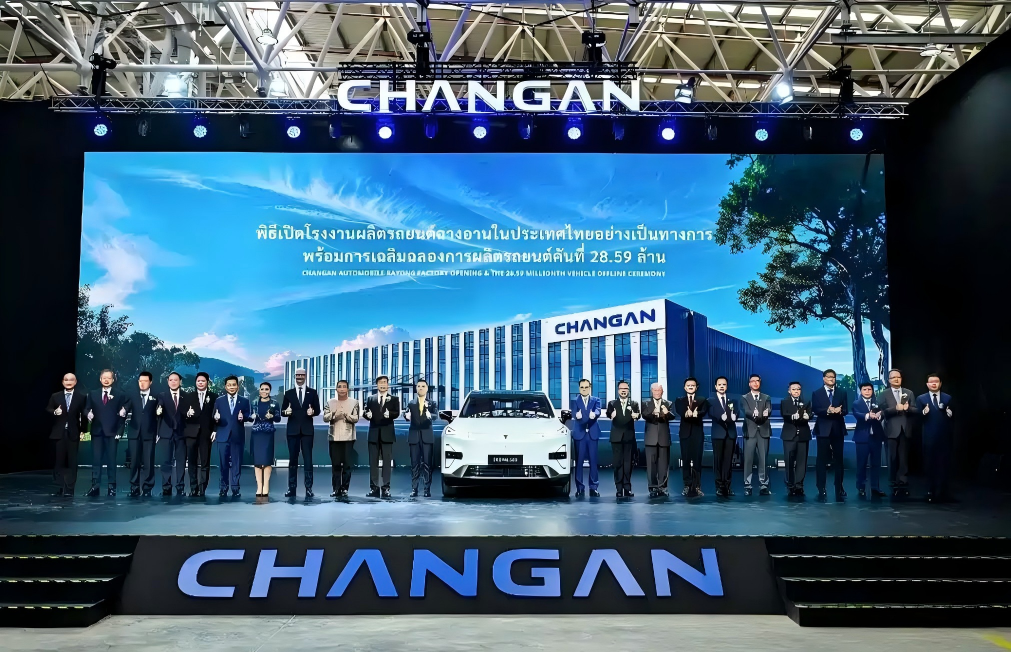
Changan is now building a closed loop of R&D, production, supply, sales, and logistics in key regions. With a plant in Thailand, R&D and manufacturing bases in Brazil, and a “1+N” global supply layout, they are moving from “made in China” to “made for the world, in the world.”
Their global mega-product strategy is also smart: no more “special cars” for single markets. They are developing “global native + regional customization” platforms. A car is designed from the start to meet Europe’s NCAP, Southeast Asia’s right-hand drive needs, and South America’s fuel quality.
As Ye Pei described a future “Version 3.0″—long-term ecological interaction with customers—the goal is to rebuild the “prestige” of Chinese brands overseas. Their new motto says it all: “No parts, no sales. No service, no overseas.”
Changan will invest tens of billions of RMB over the next five years to hit 1.5 million (striving for 1.8 million) overseas sales, making up 35-40% of total volume, and build overseas production capacity for 800,000 units by 2030.
The Takeaway: Finding Certainty in Uncertainty
What is the true core competency for an automaker in 2026?
Changan’s answer is simple: Strategic resilience and an efficiency revolution.
Don’t chase tech fads. Consolidate resources into a scalable mid-platform.
Don’t join meaningless spec-sheet wars. Make safety your brand’s deepest tag.
Don’t chase short-term profits. Invest billions in global infrastructure.
As Zhao Fei quoted in the meeting: “Amidst the drifting clouds, remain calm and composed.” In an era where the old order is failing and a new narrative is still being written, self-awareness and rigorous systems logic may be the only way to ride out the cycle. Changan isn’t just running hard. More importantly, they are learning to read the wind while picking up speed.