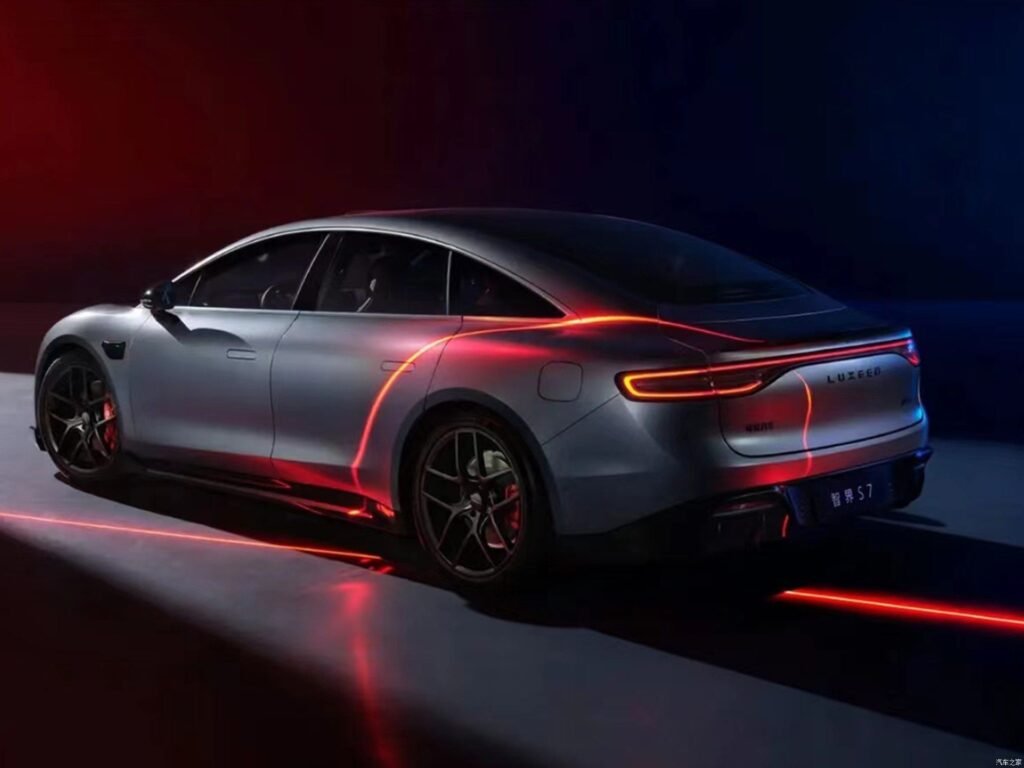
The Beijing Auto Show 2026 officially opened on April 24, and it has already made history. With a record-breaking 380,000 square meters of exhibition space—the largest of any auto show in the world—this year’s event features 1,451 vehicles, including 181 world or China premieres and 71 concept cars. All of these numbers represent significant increases from the previous Beijing Auto Show.
The message is clear: the Beijing Auto Show 2026 is no longer just a regional event—it is the undisputed global epicenter of the automotive industry.
Domestic Brands Have Firmly Taken Center Stage
If the last Beijing Auto Show saw Chinese domestic brands first step into the spotlight, this year they have completely claimed the center stage. With domestic brands now accounting for over 60% of China’s auto market, their exhibition scale and product lineup at the show fully reflect this dominance.
Major state-owned auto groups—Dongfeng, Changan, BAIC, SAIC, and GAC—have all unveiled a wave of new models. Highlights include:
- Dongfeng Voyah’s newly launched Taishan X8
- BAIC’s S3 and Wenda V9 (opening pre-sales on opening day)
- SAIC Zhiji’s newly launched LS8
- GAC revealing new technical details on its Qijie GT7 project co-developed with Huawei
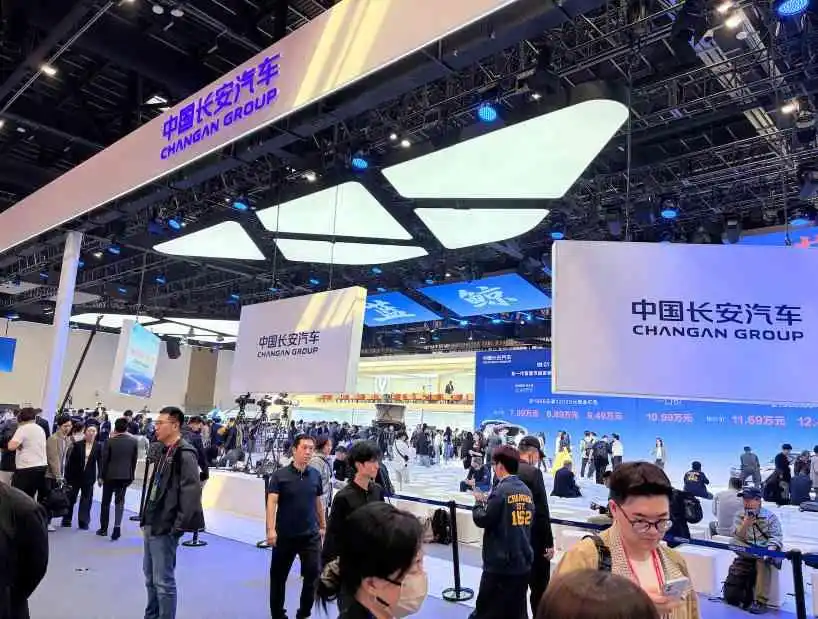
Changan Auto used the show to launch its “Haina Baichuan Plan 2.0” and two new global HEV models: the new-generation Eado Blue Whale Super Engine and the CS75PLUS Blue Whale Super Engine. Changan chairman Zhu Huarong set ambitious targets: 2.4 million NEV sales and 1.5 million overseas vehicle sales by 2030.
Geely Auto took over half a hall, with Zeekr, Lynk & Co., Geely Galaxy, and Geely China Star all participating. The company displayed a full range of vehicles across pure electric, hybrid, methanol, and fuel power. Geely also showcased breakthrough technologies like Super Eva, Qianli Haohan G-ASD 4.0, Shenjin all-solid-state battery, and China’s first natively developed robotaxi prototype—the Eva Cab.
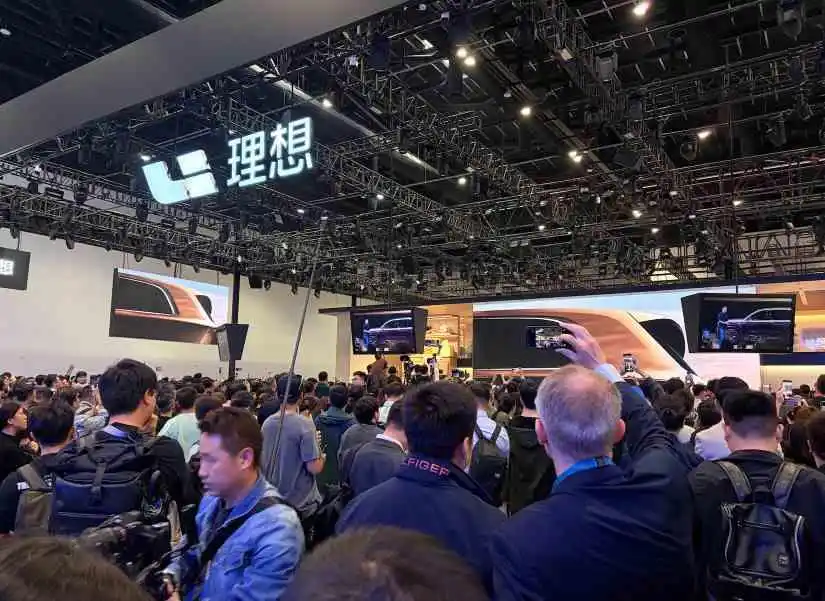
Li Auto founder, chairman, and CEO Li Xiang returned to the Beijing Auto Show, unveiling the upcoming flagship Li Auto L9 Livis (scheduled for a May launch), a key contender in the fiercely competitive “9-series” flagship market.
XPeng, appearing at its first major A-level show since renaming from “XPeng Motors,” displayed not only the flagship GX but also flying cars and robotaxis—offering a broader exhibition than many competitors.
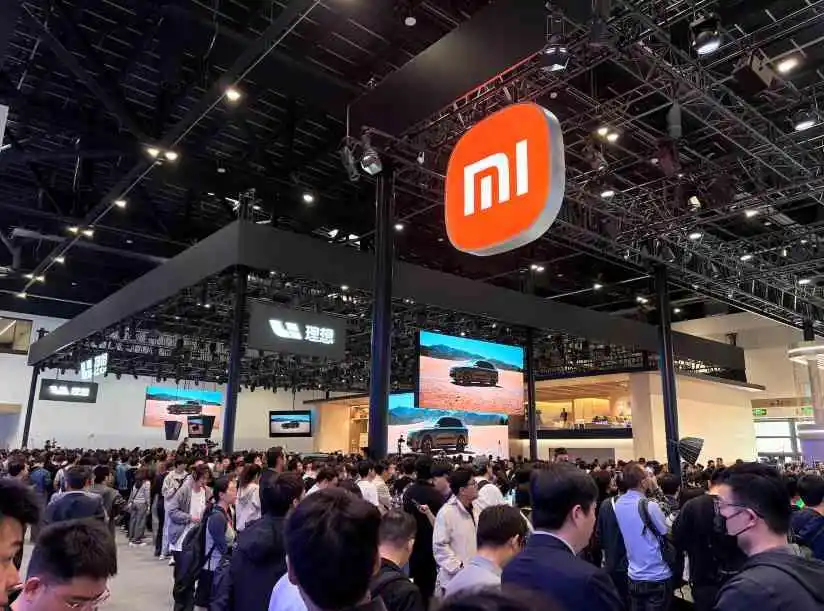
Other major domestic players—BYD, Chery, NIO, Xiaomi, and Leapmotor—are all present. BYD and Cheri once again occupy entire halls. Xiaomi displays its Xiaomi Vision Gran Turismo concept car for the first time at a domestic auto show, while NIO achieves a historic milestone: all three of its brands—NIO, ONVO, and Firefly—appear together for the first time.
Leading Overseas Brands Double Down on China
Despite declining market share, the Beijing Auto Show 2026 has seen top overseas automakers reaffirm their commitment to China with new localization strategies.
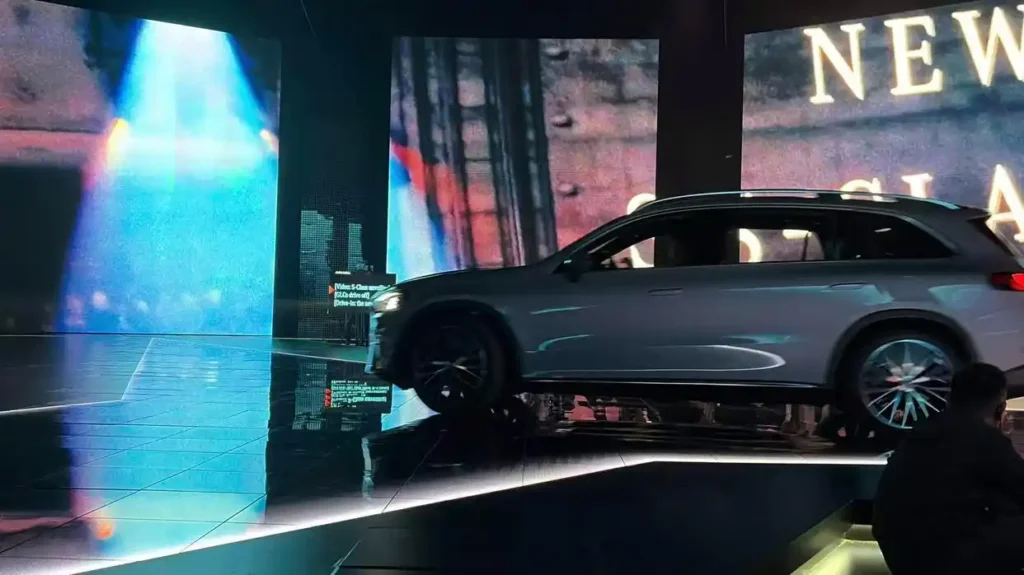
Mercedes-Benz chairman Ola Källenius stated: *“By 2027, Mercedes-Benz will launch over 40 new models across multiple powertrain forms, including seven models developed specifically for the Chinese market.”* The all-electric GLC SUV and the new-generation S-Class—developed with autonomous driving unicorn Momenta—made their debuts at the show.
BMW also emphasized its “In China, For China, Moving Forward Together with China” strategy, showcasing multiple new products developed in collaboration with local tech giants like AutoNavi, Alibaba, and Huawei.
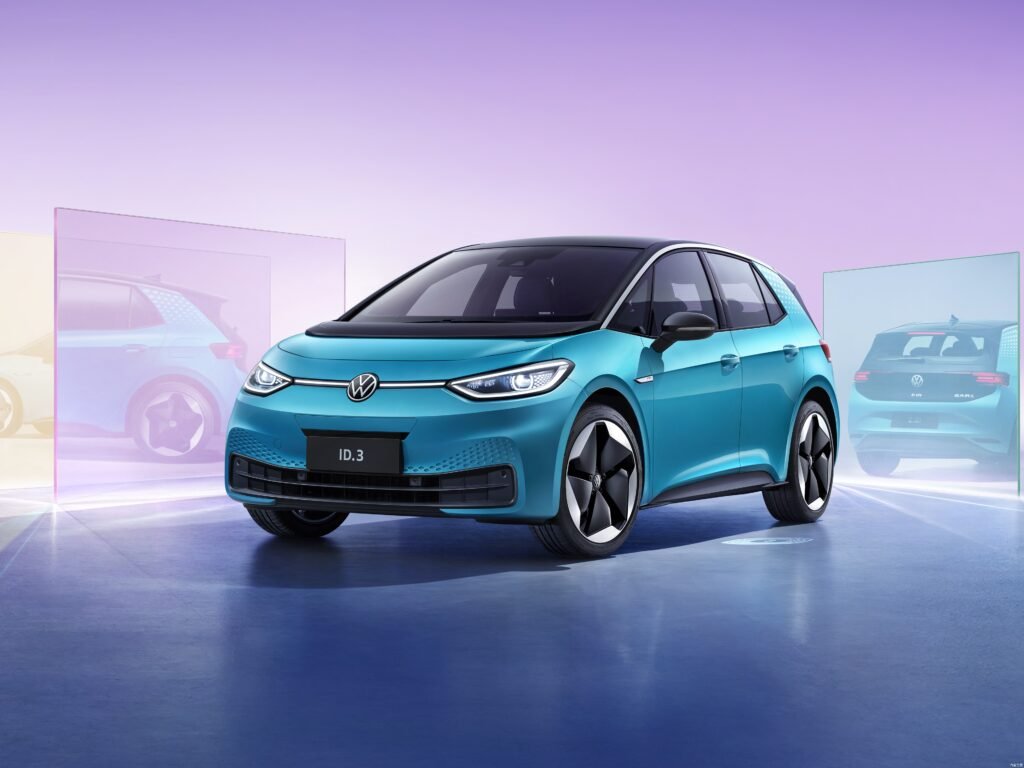
Volkswagen Group chairman Oliver Blume was even more direct: “China is the core of Volkswagen’s global transformation and a key cornerstone for achieving our global strategic goals.” The Group plans to launch over 20 NEV models in China in 2026, expanding to about 50 by 2030, including roughly 30 pure electric models. At this year’s show, VW unveiled four new vehicles, including the ID.AURA T6 and the E7X—Audi’s first all-electric large SUV developed specifically for China.
Toyota and Nissan also displayed their latest localized NEVs—the GAC Toyota Bozhi 7 and Dongfeng Nissan NX8—both developed in partnership with Huawei, Horizon Robotics, and other Chinese tech firms.
A Welcome Return: Beijing Hyundai and Dongfeng Peugeot-Citroën
Two joint ventures made surprising returns to the Beijing Auto Show 2026 after long absences.
Dongfeng Peugeot-Citroën (DPCA) returned to a domestic A-level show for the first time in three years, with both its Citroën and Peugeot brands displaying their latest electrified products.
Beijing Hyundai also returned after missing two major domestic auto shows in 2025, announcing a fresh brand strategy. Hyundai’s IONIQ brand officially launched in China, with the first production model making its world premiere at the show.
The Rise of the Supply Chain and Tech Ecosystem
The Beijing Auto Show 2026 is not just about car brands—it is also a massive stage for hundreds of supply chain and technology companies. Major players such as CATL, Horizon Robotics, Momenta, WeRide, KargoBot, Freetech, OuYee Semiconductor, Bosch, SenseAuto, and Sunwoda are all actively participating.
Chinese supply chain companies have significantly increased their exhibition scale, highlighting the strength and vitality of China’s NEV industrial chain. This “whole-zero co-exhibition” trend demonstrates that the supply chain is no longer just a supporting actor—it is a core driver of innovation.
Moreover, many overseas brands are now using Chinese expertise to power their China strategies. Mercedes-Benz, BMW, Beijing Hyundai, and SAIC-GM are all partnering with Chinese autonomous driving firms like Momenta. Audi and Toyota are working closely with Huawei and Xiaomi. This is a clear sign: to compete in China, global automakers must embrace local technology.
Absences Tell a Story of Market Turmoil
As always at the Beijing Auto Show 2026, who is not present says as much as who is.
Ultra-luxury brands such as Lamborghini, Rolls-Royce, and Bentley—all present at the previous Beijing Auto Show—are absent this year. Industry insiders point to the rapid rise of electrification and high-end Chinese domestic brands, which have intensified competition and offered Chinese consumers more choices than ever before.
Other overseas brands like Chevrolet, Kia, Genesis, Polestar, and Daolang are also missing, likely due to poor sales performance in China. Among new energy players, Yuanhang, Neta, Jiyue, Feifan, and Skywell are absent—most struggling with financial crises or restructuring.
New Forces Emerge: Fresh Faces at Beijing 2026
Yet for every brand that has fallen away, new ones have risen to take their place.
Several brands are making their Beijing Auto Show debut:
- ONVO and Firefly – NIO’s sub-brands, appearing alongside the main NIO brand, making NIO the new energy automaker with the most brands on display.
- Xiangjie and Shangjie – Huawei’s new HarmonyOS Intelligent Selection brands, developed with automakers after 2024.
- Yijing and Qijie – Launched in 2025 through Huawei Qiankun’s partnerships with Dongfeng and GAC, making their first appearance at a domestic A-level show.
- AUDI – SAIC Audi’s new brand, displaying the E5 and E7X.
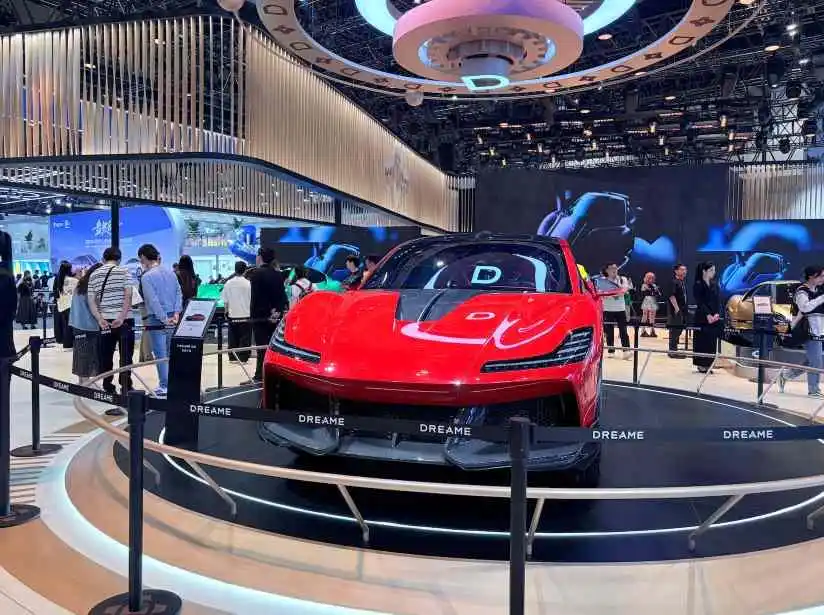
- Dreame – The smart home appliance maker, now an automotive newcomer, showcasing its concept vehicles.
Conclusion: Beijing Is Now the Global Automotive Main Stage
The Beijing Auto Show 2026 is far more than an exhibition. It is a mirror reflecting the rapid transformation of the global auto industry.
From domestic brands firmly seizing the lead, to overseas giants doubling down on China with local technology; from a powerful supply chain ecosystem taking center stage, to the constant churn of old brands falling and new ones rising—one thing is certain: Beijing has become the main stage where the future of the global automotive industry is being shaped.
What excites you most at the Beijing Auto Show 2026? The flagship 9-series SUVs? The robotaxis and flying cars? The return of familiar brands or the debut of new ones? Share your thoughts below!