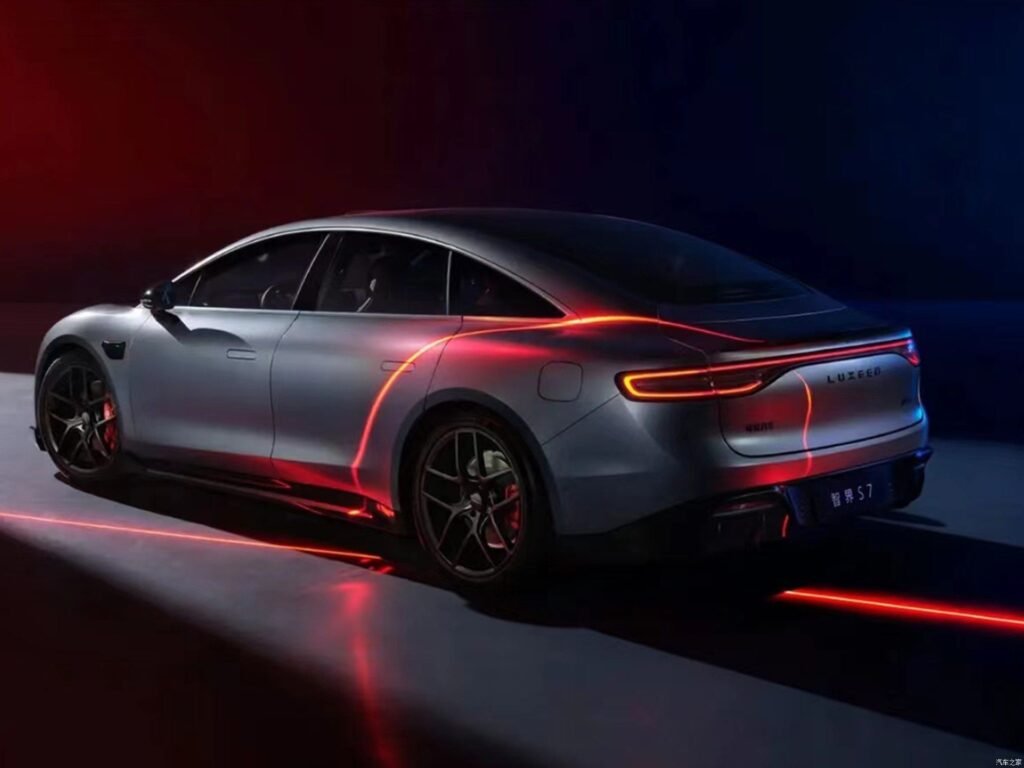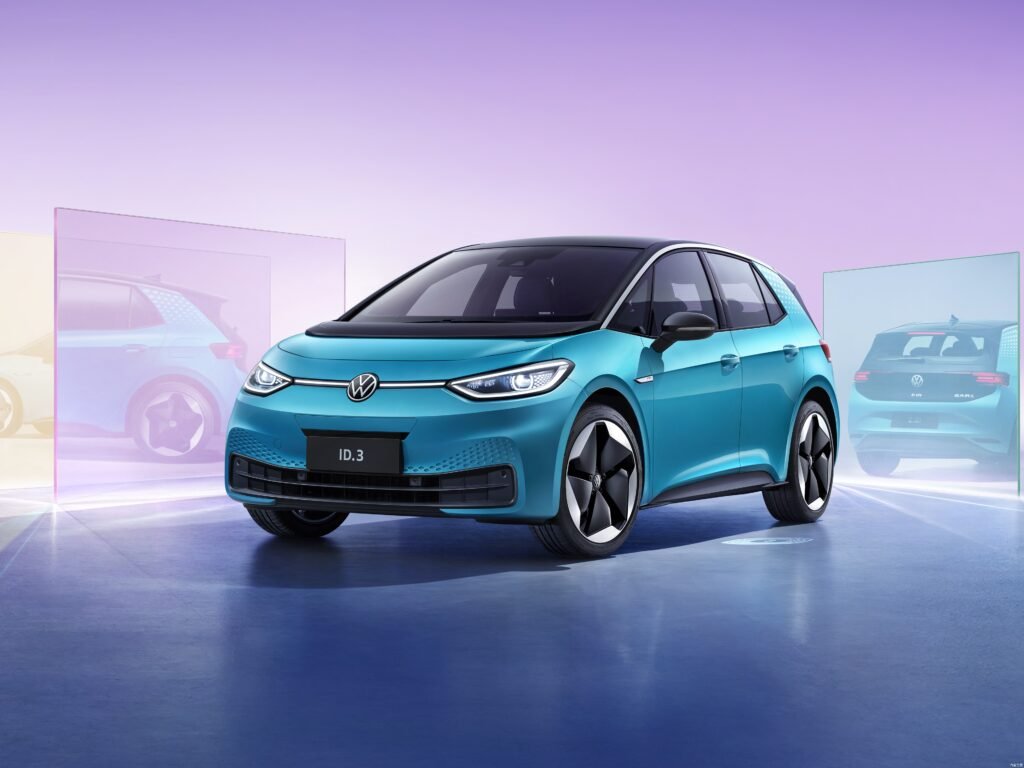
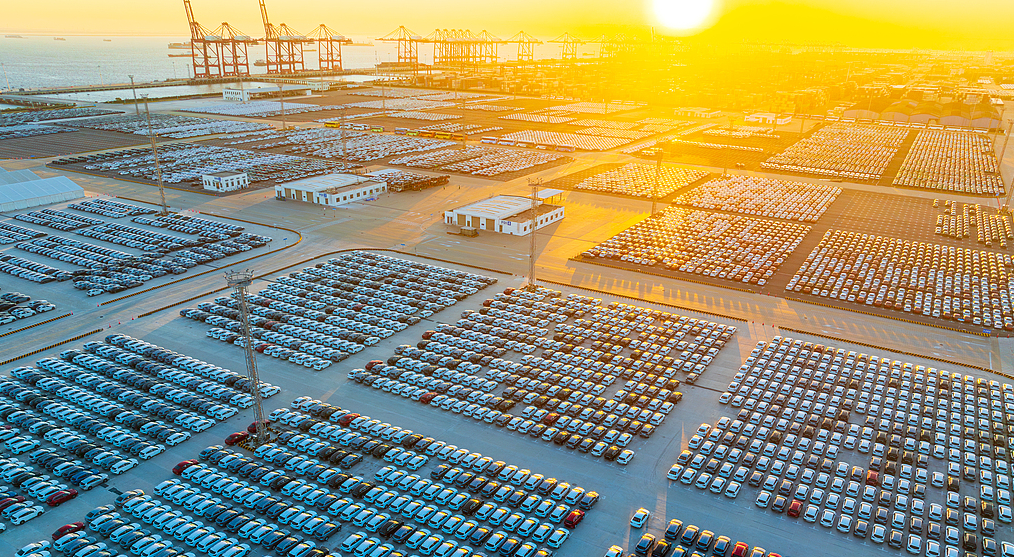
China’s automotive industry is rewriting the rules of global competition. In 2026, despite a slowing domestic market and rising trade barriers, the country’s vehicle exports have surged past expectations—posting nearly 50% year-over-year growth in both volume and value. The real story? New energy vehicles (NEVs) now account for over 70% of all exports, making China not just a manufacturing powerhouse, but a full-spectrum mobility player. This post breaks down the data, the drivers, and the strategic pivot from simple car sales to building a lasting global automotive ecosystem.
Record-Breaking Numbers: What the Data Shows
Customs data for the first five months of 2026 reveals that China’s auto export volume jumped by 48.7%, while export value rose by 45.5% compared to the same period last year. According to the China Association of Automobile Manufacturers (CAAM), total exports for the first half of the year are projected to approach 5 million vehicles—a figure that has pleasantly surprised even industry insiders.
| Metric | Growth Rate (Jan-May 2026, YoY) |
|---|---|
| Export Volume (Units) | +48.7% |
| Export Value (USD) | +45.5% |
| NEV Export Volume | +78.5% |
NEVs are the undisputed engine of this growth. Their share of total exports has climbed to 71.6%, with volume growing by an extraordinary 78.5%. This isn’t just about quantity; it reflects the global market’s appetite for China’s advanced battery tech, smart features, and competitive pricing.
Why Is This Happening? Three Core Drivers
The export boom is not accidental. Industry experts point to a combination of domestic pressure and global opportunity.
- Domestic “Involution” Pushes Brands Overseas
While exports soar, the Chinese domestic auto market contracted by about 4% in the first five months of 2026. Fierce price wars and saturated demand at home have forced automakers to look abroad for growth, making exports a vital lifeline for capacity utilization and profitability. - Unmatched Supply Chain and Tech Advantage
China possesses the world’s most complete new energy vehicle supply chain, covering everything from batteries and motors to electronic controls. This vertical integration drastically reduces costs and accelerates product iteration. Technologies like 800V fast-charging, advanced driver-assistance systems (ADAS), and intelligent cockpits give Chinese EVs a clear differentiator in markets where legacy automakers are slow to adapt. - Rising Demand in Emerging Markets
Tariff reductions under free trade agreements and recovering economies have fueled auto demand in Southeast Asia, the Middle East, and Russia. While the US and Chinese markets saw slight declines in auto sales, countries like India (+17%), Thailand (+15%), and Vietnam (+35%) posted robust growth, absorbing a significant portion of Chinese exports.
Beyond the Vehicles: The Ripple Effect on the Supply Chain
The export surge has electrified the entire automotive value chain. One Zhejiang-based parts supplier reported that orders have been “surprisingly strong,” with production capacity maxed out and orders growing by over 50% year-on-year. This upstream boost is a clear sign that the export boom is sustainable, as it strengthens the entire industrial ecosystem, not just final assembly lines.
The Bigger Picture: A Global Share Shift
The rise of Chinese brands is reshaping the global competitive landscape. According to industry data, while legacy international automakers (excluding Toyota, Hyundai-Kia, Suzuki, and Tata) are losing global market share, Chinese independent brands—especially Geely, BYD, Chery, SAIC, and Changan—are gaining ground rapidly. This “East Rising, West Declining” trend is largely attributed to the slower electrification pace of traditional Western and Japanese automakers.
Challenges Ahead: From “Trade” to “Ecosystem”
Despite the rosy numbers, experts caution that maintaining this growth requires a fundamental strategic shift. The era of pure “trade-driven” exports is ending. Geopolitics and trade barriers—including EU carbon tariffs and anti-subsidy investigations—now represent the biggest hurdles.
The future, as CAAM’s Chen Shihua and other analysts suggest, lies in localized, ecosystem-based expansion. This means moving beyond simply shipping cars to building local factories, supply chains, after-sales networks, and even financing services in key markets.
Three Major Short-Term to Long-Term Gaps to Bridge:
| Timeframe | Challenge | Description |
|---|---|---|
| Short-Term | After-Sales Service | Lagging spare parts warehouses and repair networks hurt vehicle resale value and owner confidence. |
| Medium-Term | Cross-Cultural Marketing | Brands still rely on Chinese-style performance specs rather than storytelling that resonates with local cultures. |
| Long-Term | Premium Brand Building | The “affordable” perception persists, making it difficult to penetrate the $40,000+ luxury segment. |
What’s Next for Global Automakers and Investors?
For international players and investors, the message is clear: China’s auto export growth is structurally driven, not a short-term spike. While the growth rate may moderate in the second half of 2026 due to a high comparison base and increased trade friction, the long-term trajectory remains firmly upward.
The key watchpoints are:
- Localization speed: How quickly can Chinese automakers set up compliant, efficient overseas factories?
- Supply chain migration: Will Chinese parts suppliers follow OEMs abroad to reduce costs and tariffs?
- Brand evolution: Can companies like BYD and Geely successfully reposition themselves as premium global brands?
Key Takeaways
- Exports are booming: +48.7% in volume, +45.5% in value (Jan-May 2026).
- NEVs dominate: Over 70% of exports, with 78.5% volume growth.
- Domestic weakness drives outbound push: Local sales fell ~4%, making exports essential.
- Supply chain is the secret weapon: Cost and tech advantages are unmatched.
- Future depends on “Ecosystem” success: Overseas factories, services, and branding are now critical.
China’s auto industry is no longer just the world’s factory—it’s building a global mobility ecosystem. The transition is complex, costly, and full of regulatory hurdles, but the early results speak for themselves. For automakers worldwide, the question is no longer if they should compete with Chinese brands, but how—and on what terms.